Your cart is empty.
Your cart is empty.


99.2% On-Time Delivery
Tracked International Shipping
Refund Within 28 Days
Secure, Encrypted Checkout
Each peptide batch is tested and verified to meet or exceed 98–99% purity (HPLC).
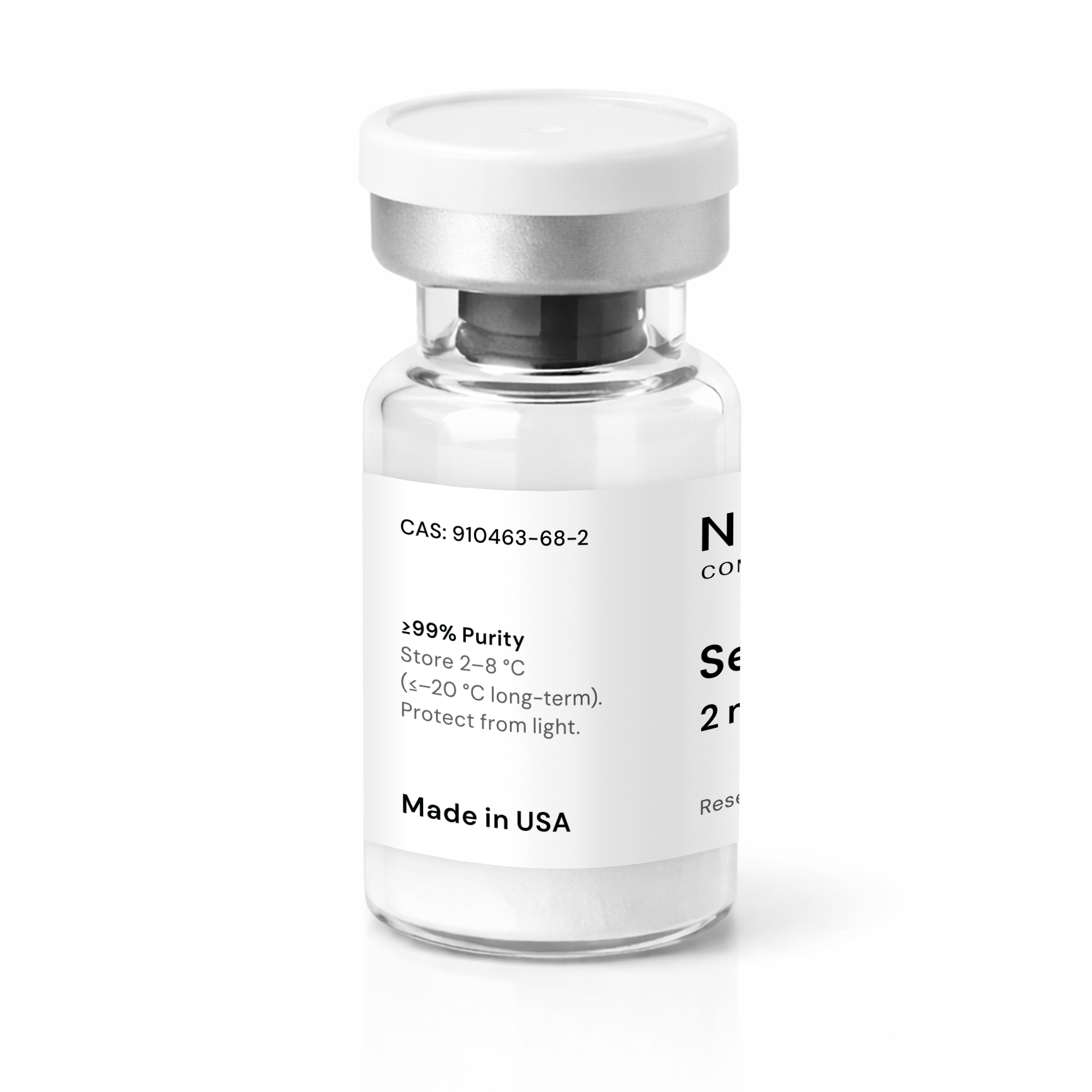
Store 2–8 °C (≤–20 °C long-term). RT exposure during transport acceptable. Protect from light.
99.2% On-Time Delivery
Tracked International Shipping
Refund Within 28 Days
Secure, Encrypted Checkout
$38.00
This product is available by prescription only
This product does not require a prescription
Out Of Stock
Each peptide batch is tested and verified to meet or exceed 98–99% purity (HPLC).
Store 2–8 °C (≤–20 °C long-term). RT exposure during transport acceptable. Protect from light.
The product is delivered in powdered (lyophilized) form and must be properly reconstituted prior to research use.
Semaglutide is a synthetic GLP-1 receptor agonist structurally derived from endogenous glucagon-like peptide-1 (GLP-1) — a 30-amino acid incretin hormone produced in intestinal L-cells that binds GLP-1 receptors on pancreatic beta-cells, hypothalamic nuclei, and cardiovascular tissue. Semaglutide incorporates a C18 fatty diacid chain attached via a linker, enabling albumin binding and substantially extending plasma half-life to approximately one week. This long-acting profile makes it a relevant model compound for studying sustained GLP-1 receptor occupancy dynamics, prolonged downstream cAMP signaling pathway activity, and longitudinal incretin pathway marker expression in extended preclinical study designs.
Semaglutide’s extended half-life supports once-weekly administration schedules in preclinical study designs, enabling stable receptor occupancy across extended observation windows without the dosing frequency variability associated with shorter-acting GLP-1 analogs. This pharmacokinetic profile is particularly valuable for multi-week longitudinal protocols where consistent GLP-1 receptor exposure is required to characterize cumulative downstream signaling pathway marker changes and metabolic endpoint progression systematically over time.
GLP-1 receptor activation by Semaglutide initiates Gs-protein-coupled adenylyl cyclase activity, elevating intracellular cAMP concentrations and activating PKA-dependent phosphorylation cascades in pancreatic beta-cell and other GLP-1 receptor-expressing cell populations. These downstream signaling dynamics — including insulin secretion assay endpoint activity, glucagon suppression pathway marker expression, and gastric motility regulatory signaling — represent the primary molecular endpoints quantified in GLP-1 receptor pharmacology and incretin signaling pathway research designs using Semaglutide as a reference agonist.
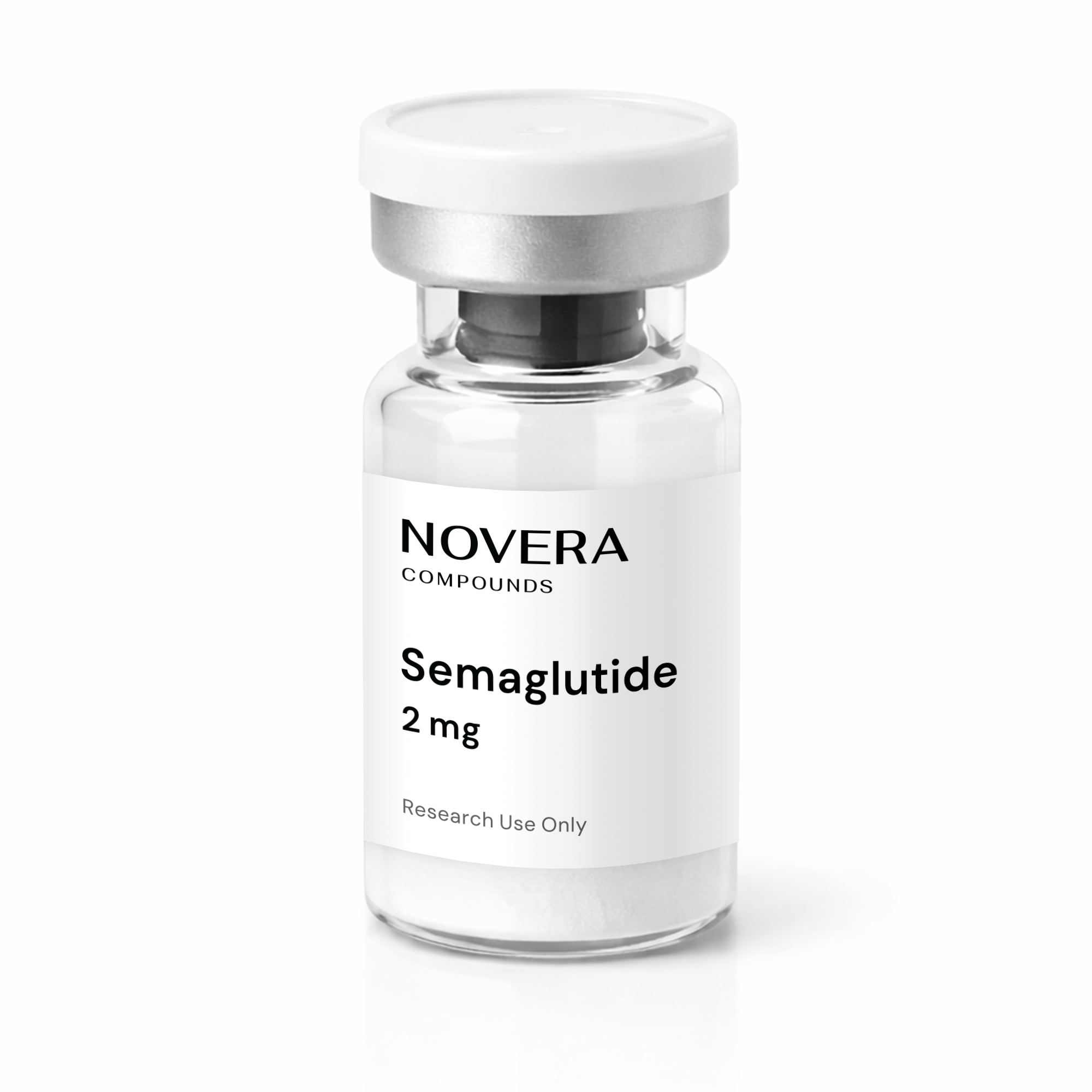
Novera supplies Semaglutide 2mg sourced from USA GMP-certified manufacturing facilities, independently verified to greater than 99% purity by HPLC and third-party COA documentation. Each vial confirms peptide sequence identity, purity grade, and batch-specific quality control data — providing professional laboratories with consistent, pharmaceutical-grade GLP-1 receptor agonist material for advanced incretin pathway signaling research.
Semaglutide 2mg is suited for professional research institutions and university laboratories investigating GLP-1 receptor pharmacology, incretin-mediated intracellular signaling dynamics, and downstream metabolic pathway marker characterization in controlled preclinical models. Research teams studying GLP-1 receptor binding affinity profiles, cAMP second messenger pathway activity, insulin secretion assay endpoints, or glucagon suppression pathway dynamics benefit from the 2mg concentration’s suitability for multi-week dose escalation and extended observation protocols. Laboratories examining the relationship between incretin receptor activation and cardiovascular or endocrine pathway signaling marker expression will find this long-acting GLP-1 analog relevant to longitudinal mechanistic study designs. Novera supplies Semaglutide 2mg sourced from USA GMP-certified manufacturing facilities, with each vial COA-verified for purity and sequence identity.
Semaglutide supports in-vitro investigation of GLP-1 receptor binding affinity characterization, receptor occupancy dynamics, and downstream cAMP second messenger pathway activity in pancreatic beta-cell line and primary culture experimental systems. Researchers characterizing long-acting GLP-1 analog receptor interaction profiles, binding competition assay endpoints, and receptor subtype selectivity parameters use Semaglutide as a primary reference agonist for comparative incretin receptor pharmacology study designs.
Laboratories studying incretin-mediated signal transduction use Semaglutide to quantify downstream molecular marker activity including insulin secretion assay output, glucagon suppression pathway marker expression, cAMP-dependent PKA phosphorylation cascade dynamics, and glucose transporter regulatory marker changes in controlled preclinical metabolic model systems. Multi-arm protocols comparing long-acting and short-acting GLP-1 receptor agonist signaling endpoint profiles support mechanistic characterization of half-life-dependent pathway interaction dynamics.
The 2mg concentration and Semaglutide’s once-weekly dosing profile support extended 16–68 week longitudinal research programs examining cumulative GLP-1 receptor pathway marker progression, dose-escalation response characterization, and long-term receptor activity dynamics. Professional laboratories managing multiple concurrent GLP-1 receptor study arms benefit from the reduced dosing frequency this long-acting analog provides, supporting consistent receptor exposure and reproducible molecular endpoint datasets across all protocol phases.
Semaglutide is incorporated into preclinical study designs examining the relationship between GLP-1 receptor activation and cardiovascular signaling pathway marker dynamics, including endothelial cell receptor expression, cardiac metabolic regulatory marker activity, and inflammatory pathway endpoint modulation in controlled cardiovascular model systems. Laboratories investigating incretin pathway interactions with endocrine signaling marker expression use Semaglutide’s well-characterized receptor profile to examine multi-system molecular endpoint dynamics in comprehensive metabolic research designs.
Reconstitute lyophilized Semaglutide 2mg with sterile bacteriostatic water using standard sterile laboratory technique under strict aseptic conditions. Reconstitution volume should be determined based on the target experimental working concentration specified by the study design. The 2mg vial accommodates multiple study administrations and extended dose escalation protocols depending on concentration requirements. Use calibrated laboratory equipment for all preparation steps and document reconstitution in accordance with institutional research record-keeping standards.
Store lyophilized peptide at 2–8°C, protected from light and moisture, prior to reconstitution. Following reconstitution, maintain refrigeration at 2–8°C; reconstituted peptide is typically stable for 2–4 weeks under appropriate storage conditions. Protect from light throughout storage. This product does not require cold-chain shipping, but immediate refrigeration upon receipt is recommended to preserve peptide integrity. Each vial supplied by Novera includes COA documentation and handling guidance.
Extended preclinical metabolic pathway research protocols using Semaglutide typically span 16–68 weeks depending on the incretin signaling endpoints and longitudinal receptor activity dynamics under investigation. Multi-week dose escalation designs allow systematic observation of receptor pathway marker progression across increasing concentration exposure windows. Monitor GLP-1 receptor pathway activity markers, insulin secretion assay endpoints, glucagon suppression pathway expression, and downstream metabolic signaling markers at defined experimental intervals throughout the observation period.
Novera Research delivers high-quality research peptides developed under strict manufacturing and quality-control standards. Each product is carefully synthesized, tested, and handled to ensure consistency, reliability, and transparency for advanced research applications.
High-purity, research-grade peptide synthesis
Analytical testing to verify quality and composition
Consistent batch-to-batch performance
Batch identification on every vial for traceability
Stored and shipped under controlled conditions
GHK-Cu (50mg): High-purity copper-coordinated tripeptide complex provided in 50mg format for laboratory research involving metal-binding chemistry and extracellular signaling pathway analysis.
Research-grade synthetic pentadecapeptide designed for controlled laboratory peptide studies and institutional research programs.
Research-grade triple-peptide formulation offering comprehensive multi-compound analysis capabilities for advanced laboratory research protocols.
Research-grade selective synthetic pentapeptide formulated for experimental peptide interaction research in controlled laboratory settings.
Research-grade synthetic peptide fragment formulated for advanced laboratory peptide research and experimental scientific protocols. Disclosure: This product is intended for research purposes only and is not intended for human consumption...
This website contains information on research compounds intended for laboratory use only. You must be 21 years or older to enter and view this content. By entering, you also agree that all products are for research use only and are not intended for human consumption.
We'll send the lab results to this email address.