Your cart is empty.
Your cart is empty.


99.2% On-Time Delivery
Tracked International Shipping
Refund Within 28 Days
Secure, Encrypted Checkout
Each peptide batch is tested and verified to meet or exceed 98–99% purity (HPLC).
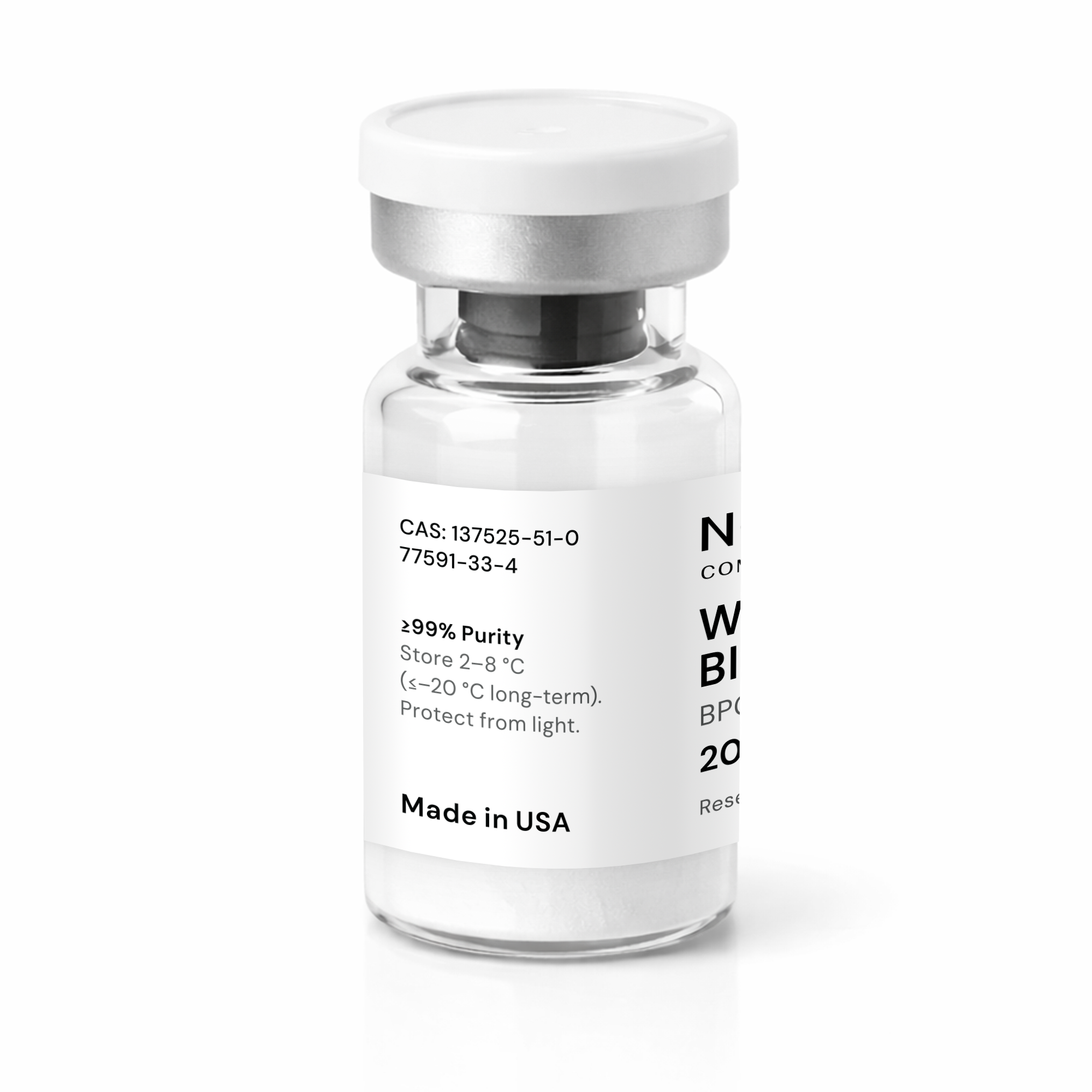
Store 2–8 °C (≤–20 °C long-term). RT exposure during transport acceptable. Protect from light.
99.2% On-Time Delivery
Tracked International Shipping
Refund Within 28 Days
Secure, Encrypted Checkout
$123.00
This product is available by prescription only
This product does not require a prescription
Each peptide batch is tested and verified to meet or exceed 98–99% purity (HPLC).
Store 2–8 °C (≤–20 °C long-term). RT exposure during transport acceptable. Protect from light.
The product is delivered in powdered (lyophilized) form and must be properly reconstituted prior to research use.
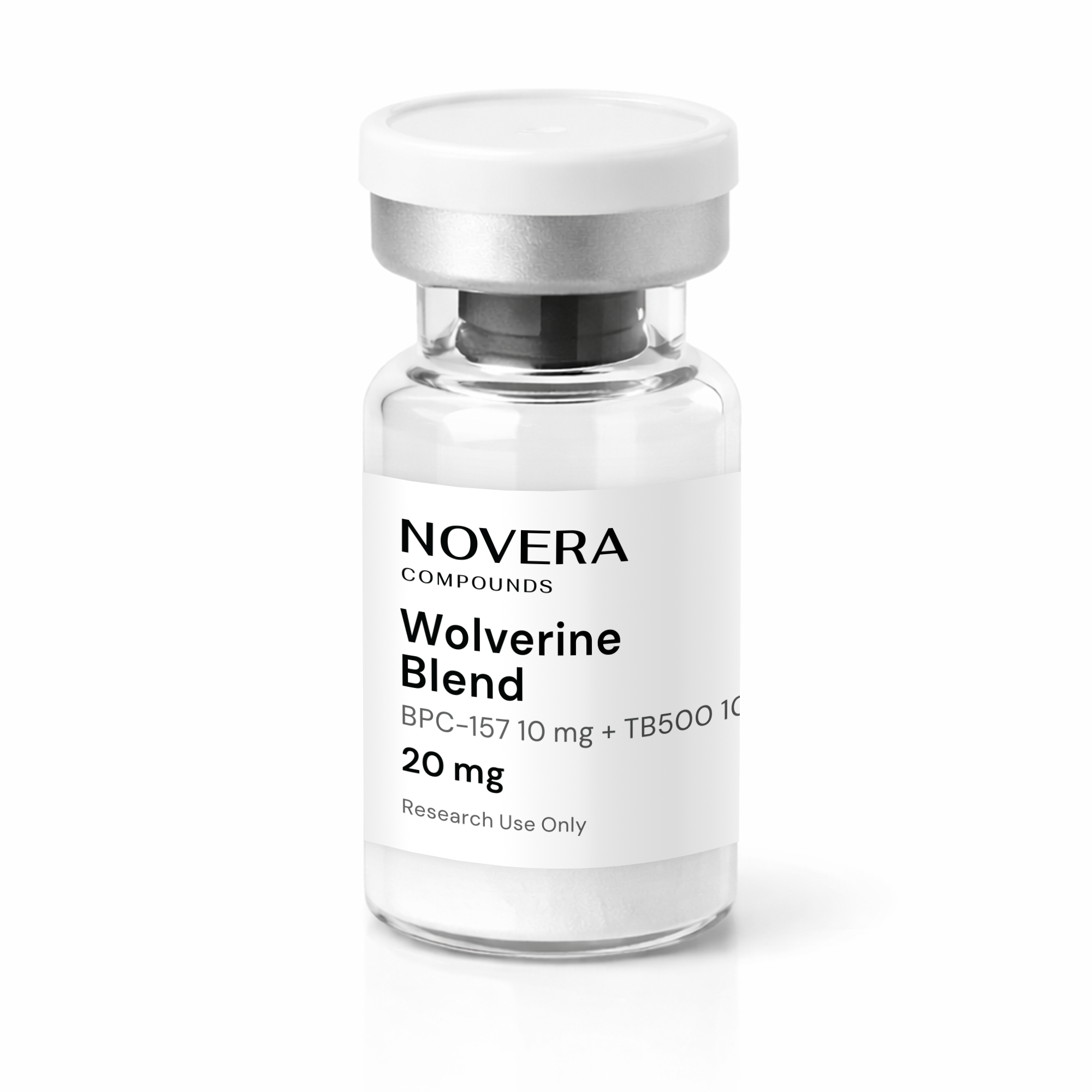
Wolverine Blend combines BPC-157 — a synthetic pentadecapeptide derived from a gastric protein sequence — with TB500, a synthetic analog of Thymosin Beta-4 (Tβ4). These two peptides are structurally unrelated and operate through distinct molecular mechanisms, making their combination relevant for researchers examining whether complementary pathway activation produces additive or synergistic effects on shared downstream signaling endpoints. Their structural distinction supports controlled mechanistic dissection of individual vs. combined pathway contributions within the same experimental model.
BPC-157 is studied for its interaction with vascular endothelial growth factor (VEGF) signaling pathways, nitric oxide system activity, and gastrointestinal mucosal cellular signaling in preclinical models. Researchers use it to examine angiogenic marker expression, endothelial cell signaling dynamics, and mucosal histological endpoint progression. Its stable gastric pentadecapeptide structure supports reproducible in-vitro and in-vivo preclinical study designs across multiple tissue model systems.
TB500 — a Thymosin Beta-4 analog — is studied for its role in actin cytoskeletal regulation, cell migration assay endpoints, and angiogenic signaling pathway activity. Tβ4 sequesters G-actin monomers, influencing cytoskeletal dynamics and downstream cellular motility marker expression. Researchers use TB500 to examine peptide-mediated modulation of cell migration parameters, endothelial tube formation assays, and extracellular matrix interaction dynamics in controlled preclinical settings.
Both components are manufactured by Elivena in USA GMP-certified facilities to approximately 99% purity, verified by independent third-party COA documentation. Each vial confirms peptide sequence identity and purity grade for both BPC-157 and TB500, providing laboratories with consistently characterized dual-peptide material for advanced multi-pathway signaling research.
Wolverine Blend is suited for research teams investigating multi-pathway peptide interaction dynamics where simultaneous modulation of distinct molecular targets is required within a single experimental protocol. Laboratories studying BPC-157’s activity on vascular endothelial signaling and gastrointestinal mucosal pathway markers alongside TB500’s role in actin cytoskeletal regulation and cell migration endpoint quantification will find the fixed-ratio format practical for combination study designs. The 10mg:10mg configuration provides sufficient material for extended multi-phase protocols without requiring separate vial management for each component. Produced by Elivena in USA GMP-certified facilities, each vial is COA-verified for purity and sequence identity across both peptides.
Wolverine Blend enables research teams to examine whether simultaneous activation of BPC-157-associated endothelial and gastrointestinal signaling pathways and TB500-associated cytoskeletal and cell migration pathways produces measurable interaction effects on shared downstream molecular markers. This design supports investigation of peptide combination effects on VEGF pathway activity, actin polymerization dynamics, and angiogenic assay endpoints in controlled in-vitro and preclinical in-vivo models.
Both components have been independently studied in relation to angiogenic signaling endpoint activity. Wolverine Blend supports research examining whether dual-peptide administration influences endothelial tube formation assay parameters, VEGF receptor interaction dynamics, and angiogenic marker expression patterns differently than single-peptide protocols — contributing to mechanistic understanding of peptide combination effects on vascular signaling biology.
TB500’s actin-sequestering activity makes Wolverine Blend relevant for studies examining cytoskeletal regulatory marker expression, directional cell migration assay outcomes, and extracellular matrix remodeling endpoint quantification. Combination with BPC-157 allows researchers to investigate whether endothelial and gastrointestinal signaling pathway activity modulates cell migration endpoint parameters in shared tissue model systems.
Reconstitute lyophilized Wolverine Blend with sterile bacteriostatic water using standard sterile laboratory technique. Reconstitution volume should be determined based on the target experimental concentration for each component as specified by the study design. Both peptides are present in equal quantities; researchers requiring independent dosing of each component should use separately sourced vials of BPC-157 and TB500. Use calibrated laboratory equipment for all preparation and handling steps.
Store lyophilized blend at 2–8°C, protected from light and moisture, prior to reconstitution. Following reconstitution, maintain refrigeration at 2–8°C and use within the timeframe specified in the laboratory protocol. Lyophilized material does not require cold-chain shipping but should be refrigerated upon receipt to preserve the integrity of both peptide components. Each Elivena vial is supplied with COA documentation and handling guidance for dual-peptide formulations.
Novera Research delivers high-quality research peptides developed under strict manufacturing and quality-control standards. Each product is carefully synthesized, tested, and handled to ensure consistency, reliability, and transparency for advanced research applications.
High-purity, research-grade peptide synthesis
Analytical testing to verify quality and composition
Consistent batch-to-batch performance
Batch identification on every vial for traceability
Stored and shipped under controlled conditions
Research-grade selective synthetic pentapeptide formulated for experimental peptide interaction research in controlled laboratory settings.
Research-grade synthetic dual-agonist peptide formulated in higher-quantity 15mg format for extended dual-receptor pathway studies and institutional peptide research in controlled laboratory environments.
Research-grade synthetic peptide formulated in mid-range 10mg quantity for cellular migration studies and peptide actin-binding research in controlled laboratory environments.
Research-grade synthetic tetrapeptide formulated for experimental cellular and longevity-focused research in controlled laboratory environments.
A synthetic 44-amino acid analog of growth hormone-releasing hormone studied for pituitary receptor binding kinetics, GHRH pathway signaling dynamics, and downstream somatotropic axis marker activity in controlled preclinical models.
This website contains information on research compounds intended for laboratory use only. You must be 21 years or older to enter and view this content. By entering, you also agree that all products are for research use only and are not intended for human consumption.
We'll send the lab results to this email address.