Your cart is empty.
Your cart is empty.


99.2% On-Time Delivery
Tracked International Shipping
Refund Within 28 Days
Secure, Encrypted Checkout
Each peptide batch is tested and verified to meet or exceed 98–99% purity (HPLC).
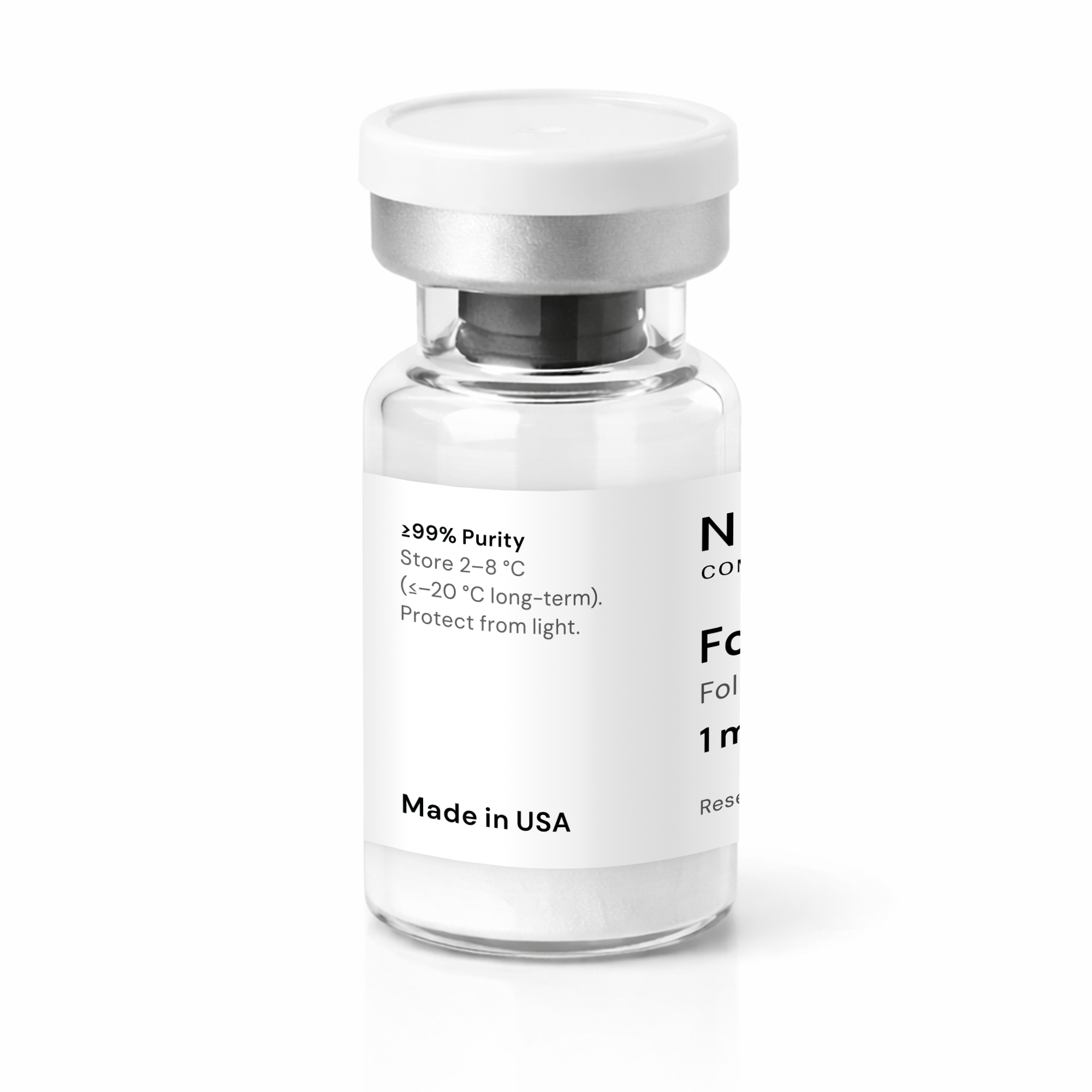
Store 2–8 °C (≤–20 °C long-term). RT exposure during transport acceptable. Protect from light.
99.2% On-Time Delivery
Tracked International Shipping
Refund Within 28 Days
Secure, Encrypted Checkout
$165.00
This product is available by prescription only
This product does not require a prescription
Each peptide batch is tested and verified to meet or exceed 98–99% purity (HPLC).
Store 2–8 °C (≤–20 °C long-term). RT exposure during transport acceptable. Protect from light.
The product is delivered in powdered (lyophilized) form and must be properly reconstituted prior to research use.
Follistatin 344 binds activin and myostatin ligands with high affinity, neutralizing their availability for TGF-β superfamily receptor engagement in preclinical experimental models. This ligand sequestration mechanism prevents activin and myostatin from binding activin receptor type IIA and IIB, suppressing downstream SMAD2/3 phosphorylation cascade activation and associated transcriptional regulatory marker expression. The ligand sequestration profile enables researchers to investigate TGF-β superfamily pathway inhibition dynamics, downstream SMAD cascade suppression endpoint characterization, and activin receptor occupancy competition parameters under defined follistatin concentration conditions in controlled preclinical model systems.
Follistatin 344 contains a C-terminal heparan sulfate proteoglycan binding domain absent from the Follistatin 315 isoform, producing distinct tissue localization dynamics and extracellular matrix interaction parameters in preclinical experimental models. This isoform-specific structural feature influences the spatial distribution of ligand sequestration activity, enabling researchers to investigate how follistatin isoform-dependent localization differences modify local vs. systemic activin and myostatin pathway inhibition marker patterns. Comparative study designs employing Follistatin 344 alongside Follistatin 315 support systematic isoform-dependent molecular endpoint differentiation across shared downstream SMAD cascade marker systems.
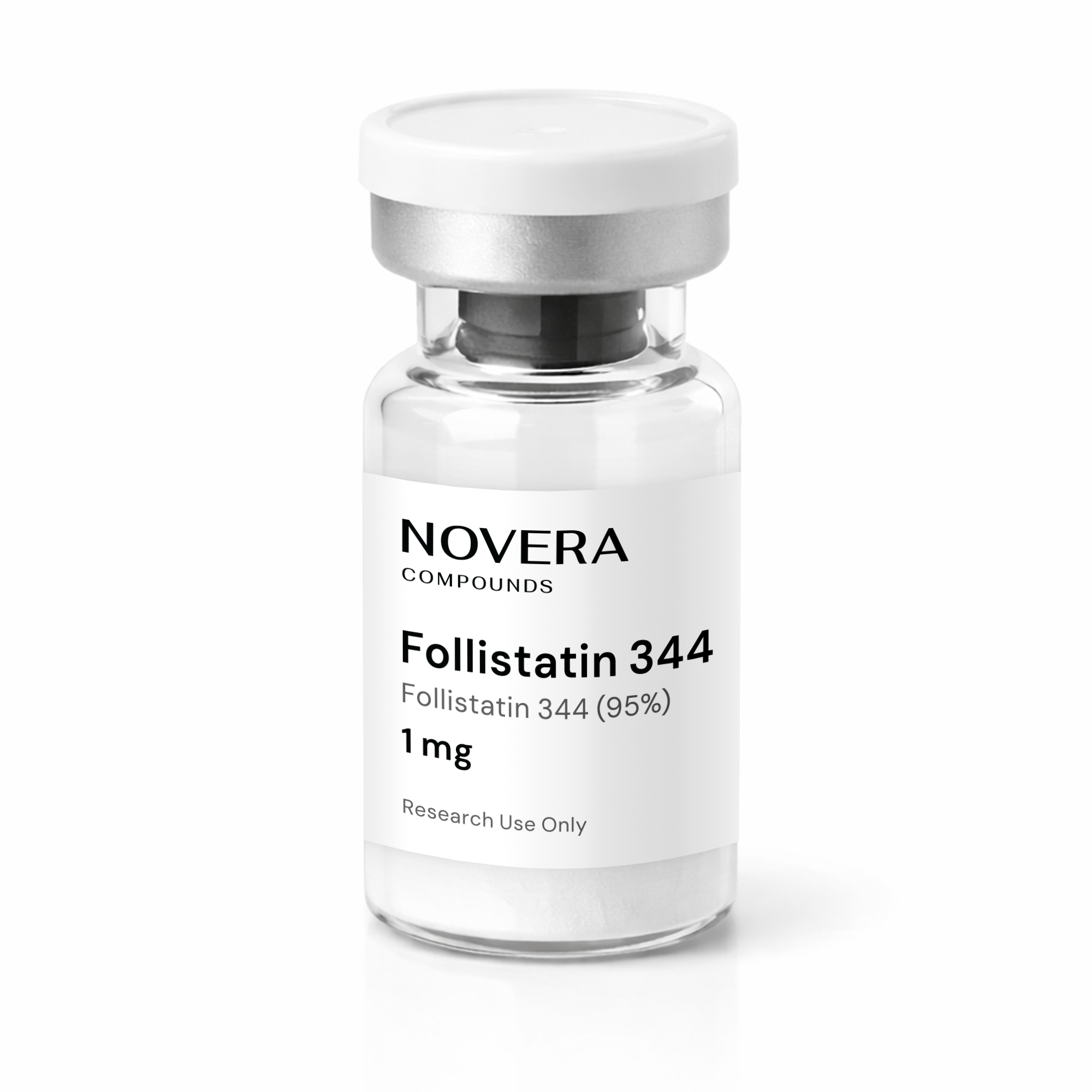
Novera supplies Follistatin 344 1mg sourced from USA GMP-certified manufacturing facilities, independently verified to approximately 95% purity by third-party COA documentation. Each vial confirms glycoprotein sequence identity, purity grade, and batch-specific quality control data — providing research laboratories with consistent, research-grade follistatin isoform material for advanced TGF-β superfamily ligand interaction pharmacology and SMAD signaling pathway research.
Follistatin 344 1mg is suited for research teams and TGF-β superfamily signaling laboratories investigating activin ligand binding kinetics, myostatin receptor pathway inhibition dynamics, and downstream SMAD signaling cascade marker characterization in controlled preclinical models. Scientists examining follistatin isoform-specific ligand sequestration parameters, activin receptor type II binding interaction dynamics, and downstream SMAD2/3 phosphorylation pathway marker expression will find Follistatin 344 relevant to mechanistic TGF-β superfamily ligand interaction pharmacology study designs.
Research programs requiring a structurally defined follistatin isoform reference compound for comparative ligand binding investigations alongside Follistatin 315 or other TGF-β superfamily modulator compounds benefit from Follistatin 344’s distinct heparan sulfate proteoglycan binding domain profile, which influences tissue localization dynamics and ligand sequestration interaction parameters in preclinical experimental models. Laboratories studying myostatin signaling pathway inhibition, activin-mediated SMAD cascade suppression dynamics, and follistatin isoform-dependent ligand neutralization kinetics in skeletal muscle cell, gonadal tissue, and neural preclinical experimental models will find Follistatin 344 well-suited to multi-arm TGF-β superfamily signaling study designs. Novera supplies Follistatin 344 1mg sourced from USA GMP-certified manufacturing facilities, with each vial COA-verified for purity and sequence identity to approximately 95%.
Follistatin 344 supports in vitro investigation of activin and myostatin ligand binding affinity parameters, competitive receptor occupancy dynamics, and downstream SMAD2/3 phosphorylation cascade suppression in activin receptor type IIA and IIB preclinical cell line experimental models. Researchers characterizing follistatin concentration-dependent ligand neutralization kinetics, receptor binding competition interaction parameters, and downstream pathway inhibition endpoint dynamics use Follistatin 344 as a primary reference compound for TGF-β superfamily ligand sequestration pharmacology study designs.
Laboratories studying TGF-β superfamily signal transduction use Follistatin 344 to quantify downstream molecular marker activity across SMAD2/3 phosphorylation inhibition endpoints, transcriptional regulatory marker expression suppression dynamics, and activin receptor-mediated cascade attenuation characterization in controlled preclinical model systems. Multi-arm protocols comparing Follistatin 344-mediated downstream SMAD pathway inhibition profiles with those produced by Follistatin 315 or other TGF-β superfamily modulators support mechanistic characterization of isoform-dependent differences in downstream signaling endpoint response patterns.
Follistatin 344 enables preclinical investigation of myostatin ligand sequestration dynamics, ActRIIB receptor pathway inhibition marker expression, and downstream SMAD cascade suppression in skeletal muscle cell experimental models. Research examining myostatin-mediated transcriptional regulatory marker activity, follistatin concentration-dependent pathway inhibition kinetics, and downstream anabolic signaling pathway marker characterization uses Follistatin 344 as a mechanistically defined ligand sequestration reference compound for TGF-β superfamily skeletal muscle signaling study designs.
Follistatin 344’s heparan sulfate proteoglycan binding domain enables multi-arm comparative study designs examining how isoform-specific tissue localization dynamics produce different local vs. systemic downstream SMAD pathway inhibition marker patterns relative to Follistatin 315. Research quantifying isoform-dependent molecular endpoint differences across activin and myostatin ligand sequestration kinetics, receptor binding competition parameters, and downstream transcriptional regulatory marker suppression dynamics contributes to mechanistic understanding of follistatin isoform biology across shared TGF-β superfamily downstream pathway systems.
Reconstitute lyophilized Follistatin 344 1mg with sterile bacteriostatic water using standard sterile laboratory technique. Reconstitution volume should be determined based on the target experimental working concentration specified by the study design. Given the 1mg vial format, precise calibration of reconstitution volume is particularly important to ensure accurate working concentration preparation across all experimental protocol phases; document each reconstitution step in accordance with institutional research record-keeping standards. Use calibrated laboratory equipment throughout all preparation steps.
Store lyophilized glycoprotein at 2–8°C, protected from light and moisture, prior to reconstitution. Avoid exposure to repeated freeze-thaw cycling to preserve follistatin structural integrity and ligand binding activity. Following reconstitution, maintain refrigeration at 2–8°C; reconstituted material remains stable for approximately 2–4 weeks under appropriate storage conditions. This product does not require cold-chain shipping, but immediate refrigeration upon receipt is recommended to preserve glycoprotein sequence integrity throughout the protocol period. Each vial supplied by Novera includes COA documentation and handling guidance.
Preclinical TGF-β superfamily signaling pathway studies using Follistatin 344 span observation periods determined by experimental objectives — from acute ligand binding kinetics and short-term SMAD cascade suppression characterization studies through extended multi-week downstream transcriptional regulatory marker progression and isoform-dependent localization dynamics protocols. Monitor activin receptor pathway activity markers, downstream SMAD2/3 phosphorylation inhibition dynamics, myostatin pathway suppression endpoint expression, and follistatin concentration-dependent ligand sequestration parameters at defined experimental intervals throughout the observation period, in accordance with institutional laboratory standards.
Novera Research delivers high-quality research peptides developed under strict manufacturing and quality-control standards. Each product is carefully synthesized, tested, and handled to ensure consistency, reliability, and transparency for advanced research applications.
High-purity, research-grade peptide synthesis
Analytical testing to verify quality and composition
Consistent batch-to-batch performance
Batch identification on every vial for traceability
Stored and shipped under controlled conditions
Research-grade decapeptide signaling molecule formulated for experimental peptide pathway research in controlled laboratory environments.
Explore GHK-CU BPC-157 Tb-500 KPV Klow Blend, Novera's most advanced peptide blend. This superior four-peptide formula delivers unmatched benefits for skin and tissue repair, inflammatory balance, and rapid recovery.
A synthetic aromatic-cationic tetrapeptide studied for selective inner mitochondrial membrane localization, cardiolipin binding dynamics, and oxidative phosphorylation pathway marker activity in controlled in-vitro and preclinical models.
Research-grade dual-peptide formulation combining two synthetic peptides for streamlined laboratory peptide research protocols.
Research-grade synthetic peptide formulated in mid-range 10mg quantity for cellular migration studies and peptide actin-binding research in controlled laboratory environments.
This website contains information on research compounds intended for laboratory use only. You must be 21 years or older to enter and view this content. By entering, you also agree that all products are for research use only and are not intended for human consumption.
We'll send the lab results to this email address.