Subcategories
This category is organized into three subcategories, each corresponding to a distinct domain of neuroscience research investigation:
- Cognitive Enhancement Peptides — compounds studied in receptor binding assays and neurotransmitter signaling pathway models relevant to attention, learning, and memory-associated cellular mechanisms
- Sleep & Stress Regulation Peptides — compounds studied in HPA axis signaling, GABA receptor interaction, and cortisol pathway research models in neuronal and endocrine cell systems
- Neuroprotection & Brain Health Peptides — compounds studied in apoptosis pathway assays, neuroinflammatory cytokine models, and oxidative stress marker research in neuronal cell line systems
Brain, Cognitive & Nootropic Peptide Compounds: Research Catalog
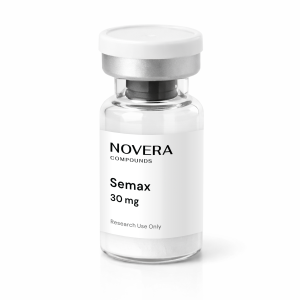
Semax — 5 mg
| Sequence |
Heptapeptide ACTH(4-7) analog: Met-Glu-His-Phe-Pro-Gly-Pro |
| Molecular Weight |
813.94 Da |
| Format |
Lyophilized powder, 5 mg vial |
| Purity |
≥98% (HPLC verified, COA on file) |
| Research Classification |
ACTH-derived neuropeptide analog; studied in BDNF and NGF expression assays, dopamine receptor interaction models, and neuronal cell line proliferation and differentiation marker profiling in cognitive pathway research |
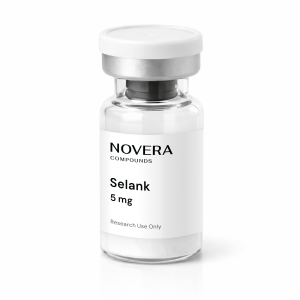
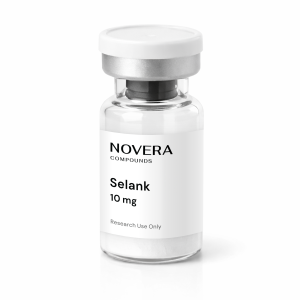
Selank — 5 mg
| Sequence |
Heptapeptide tuftsin analog: Thr-Lys-Pro-Arg-Pro-Gly-Pro |
| Molecular Weight |
751.87 Da |
| Format |
Lyophilized powder, 5 mg vial |
| Purity |
≥98% (HPLC verified, COA on file) |
| Research Classification |
Synthetic tuftsin analog; studied in BDNF expression regulation, enkephalin system interaction, GABAergic signaling models, and anxiety-related cytokine pathway research in neuronal and immune cell line systems |
Dihexa — 5 mg
| Sequence |
Hexapeptide HGF receptor potentiator: N-hexanoyl-Tyr-Ile-His-Pro-Phe-OH |
| Molecular Weight |
812.01 Da |
| Format |
Lyophilized powder, 5 mg vial |
| Purity |
≥98% (HPLC verified, COA on file) |
| Research Classification |
HGF/c-Met receptor potentiating peptide; studied in synaptogenesis pathway assays, dendritic spine density quantification in primary neuronal culture models, and BDNF-TrkB receptor interaction research in cognitive cell biology |
Cerebrolysin — 5 mL
| Composition |
Porcine brain-derived peptide mixture; low-molecular-weight neuropeptides and amino acid fraction, <10 kDa |
| Molecular Weight |
Variable (peptide fraction mixture) |
| Format |
Solution for research use, 5 mL vial |
| Purity |
Standardized by protein content; activity-normalized, COA on file |
| Research Classification |
Neuropeptide complex; studied in nerve growth factor (NGF) and BDNF mimetic activity assays, MAP kinase and PI3K/Akt signaling pathway interaction models, and neuroprotection research in neuronal cell line and primary culture systems |
Research Applications: Four Areas of Laboratory Investigation
- BDNF and NGF Signaling Pathway Research
Brain-derived neurotrophic factor (BDNF) and nerve growth factor (NGF) signaling pathways represent core research domains for this compound category. Semax and Dihexa both have published profiles involving BDNF and NGF receptor interaction models. In vitro assays in this area use TrkB and TrkA receptor phosphorylation profiling, ELISA-based neurotrophic factor quantification in conditioned media, and reporter gene systems to characterize downstream MAPK and PI3K/Akt cascade activation in neuronal cell lines including SH-SY5Y and PC12 models. These studies provide mechanistic data on peptide-receptor interaction in neurotrophic signaling contexts under controlled laboratory conditions.
- Synaptic Plasticity and Synaptogenesis Assay Models
Dihexa is among the most studied compounds in this category in the context of synaptogenesis pathway research. Published studies have used primary hippocampal neuron cultures to quantify dendritic spine density, PSD-95 scaffolding protein expression, and synaptic vesicle marker distribution in the presence of this HGF/c-Met potentiating peptide. Cerebrolysin has also been examined in synaptic plasticity models, with assays profiling synapsin-I and GAP-43 expression in neuronal differentiation systems. These models are conducted in vitro and do not constitute claims regarding learning, memory, or cognitive outcomes.
- GABAergic and Enkephalin System Interaction Research
Selank has been studied in published laboratory models for its interaction with the GABAergic signaling system and enkephalin-degrading enzyme pathways. In vitro research has examined its effects on GABA-A receptor subunit expression profiles, enkephalinase inhibition assays, and cytokine cascade dynamics in immune and neuronal cell co-culture systems. These assay systems are used to characterize peptide-receptor and peptide-enzyme interaction dynamics in neuropharmacological research contexts, without reference to anxiolytic or stress-reducing outcomes in subjects.
- Neuroprotective Signaling and Neuroinflammatory Pathway Models
Cerebrolysin and Semax both appear in published literature examining neuroprotective signaling in the context of neuroinflammatory and oxidative stress models. In vitro assays in this domain profile TNF-α and IL-6 cytokine expression in LPS-stimulated microglial cell lines, NF-κB pathway activation dynamics, and caspase-3/7 activity in apoptosis-challenged neuronal cultures. These models provide mechanistic insight into peptide behavior in neuroinflammatory research contexts and are conducted exclusively under controlled laboratory conditions by qualified researchers.
Selecting the Right Compound for Your Research Protocol
Researchers designing studies in neuroscience, neurotrophic signaling, or cognitive cell biology typically evaluate compounds based on documented receptor interaction profiles and downstream signaling cascade data from published neuroscience literature, stability in aqueous cell culture media and resistance to peptidase degradation in the target assay system, molecular weight and blood-brain barrier penetration modeling data where relevant to in vivo experimental design, and COA-verified purity with endotoxin data for primary neuronal culture and cell-based assay systems.
Novera provides complete product specifications for each compound including molecular weight or composition, sequence, recommended storage conditions, and available presentation formats. Researchers are encouraged to review compound data sheets and cross-reference with primary neuroscience literature before finalizing protocols. Novera does not provide experimental design guidance, dosing parameters, or outcome interpretation.
Institutional procurement offices and principal investigators with multi-compound requirements or volume supply needs are invited to contact Novera’s research supply team to confirm batch availability, lot documentation, and GMP certification status for each referenced compound.
Supply and Quality Standards
All compounds in this category are procured from USA-based GMP-certified manufacturing facilities. Standard quality documentation and protocols include:
- Certificate of Analysis (COA) for every batch confirming molecular identity and HPLC-verified purity
- Mass spectrometry sequence confirmation for all defined-sequence synthesized peptides
- Activity normalization and protein content standardization for mixture-based preparations (Cerebrolysin)
- Endotoxin testing (LAL method) available on request — particularly recommended for primary neuronal culture applications
- Sterility certification for applicable lyophilized and solution-format compounds
- Temperature-controlled cold-chain shipping for all stability-sensitive neurological peptide materials
- Full compliance with USA regulatory frameworks governing research compound distribution
Novera does not supply compounds for human or veterinary administration. All purchase documentation classifies materials as research and laboratory use only. Institutional and bulk procurement arrangements are available subject to qualification review.
Brain, Cognitive & Nootropic Peptides: Research Classification and Molecular Context
In neuroscience and molecular pharmacology literature, “nootropic peptides” and “cognitive peptides” are applied categorical terms for amino acid sequences studied in the context of neural signaling pathways associated with learning, memory, attention, and neuroprotection at the cellular and molecular level. These include synthetic analogs of endogenous neuropeptides such as ACTH and tuftsin, growth factor receptor potentiating sequences, and neuropeptide complex preparations studied for their interactions with neurotrophin receptor cascades.
The classification of a compound as a brain or cognitive research peptide is based on its published molecular interaction profile in neuroscience literature — specifically, its documented behavior in neuroreceptor binding assays, neurotrophic factor signaling models, or neuroprotection pathway studies conducted in vitro. Classification does not imply demonstrated effects on cognition, focus, memory, or any other neurological function in human or animal subjects. All compounds in this catalog are supplied as experimental research tools for mechanistic investigation in qualified laboratory settings.

 132
132