Your cart is empty.
Your cart is empty.


99.2% On-Time Delivery
Tracked International Shipping
Refund Within 28 Days
Secure, Encrypted Checkout
Each peptide batch is tested and verified to meet or exceed 98–99% purity (HPLC).
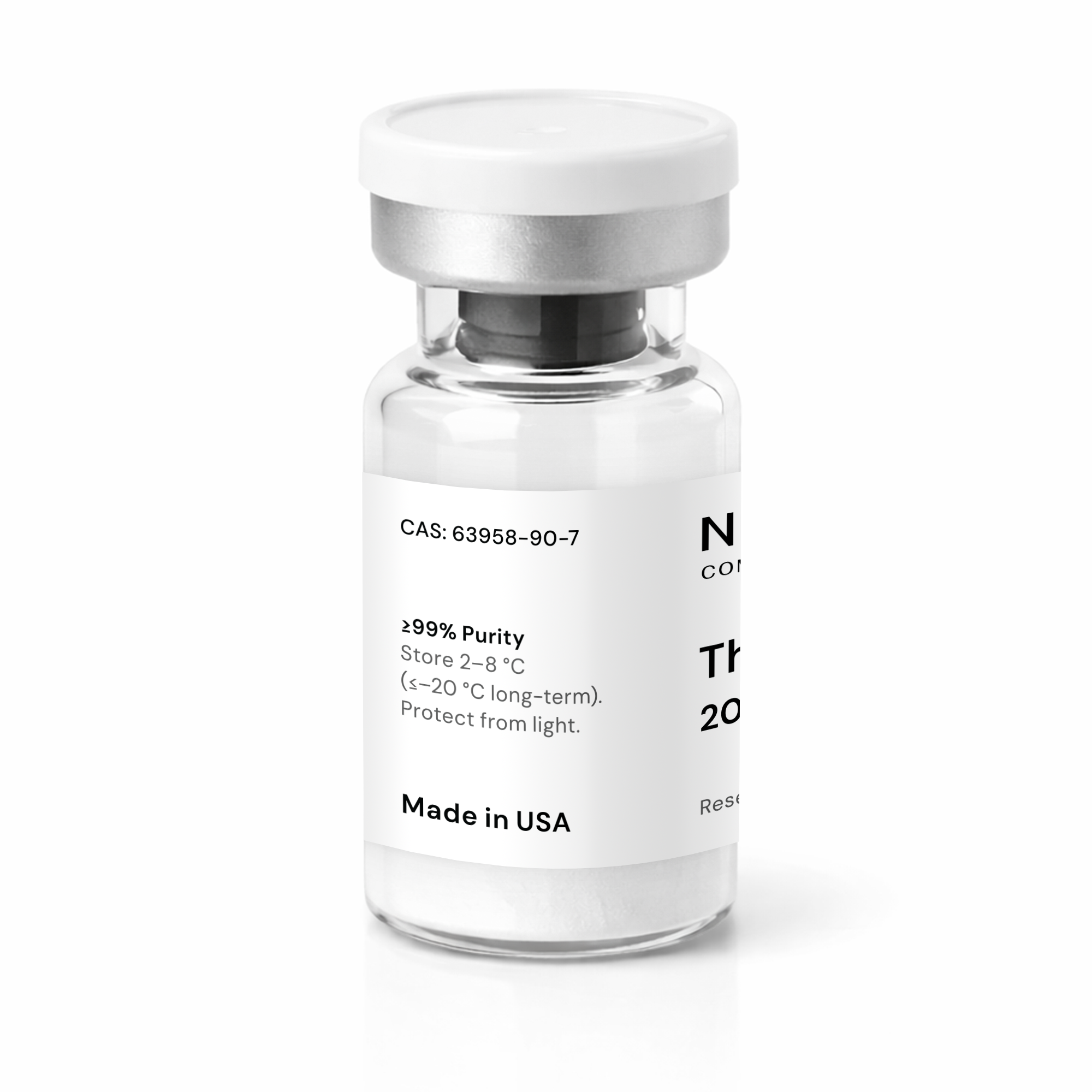
Store 2–8 °C (≤–20 °C long-term). RT exposure during transport acceptable. Protect from light.
99.2% On-Time Delivery
Tracked International Shipping
Refund Within 28 Days
Secure, Encrypted Checkout
$123.00
This product is available by prescription only
This product does not require a prescription
Out Of Stock
Each peptide batch is tested and verified to meet or exceed 98–99% purity (HPLC).
Store 2–8 °C (≤–20 °C long-term). RT exposure during transport acceptable. Protect from light.
The product is delivered in powdered (lyophilized) form and must be properly reconstituted prior to research use.
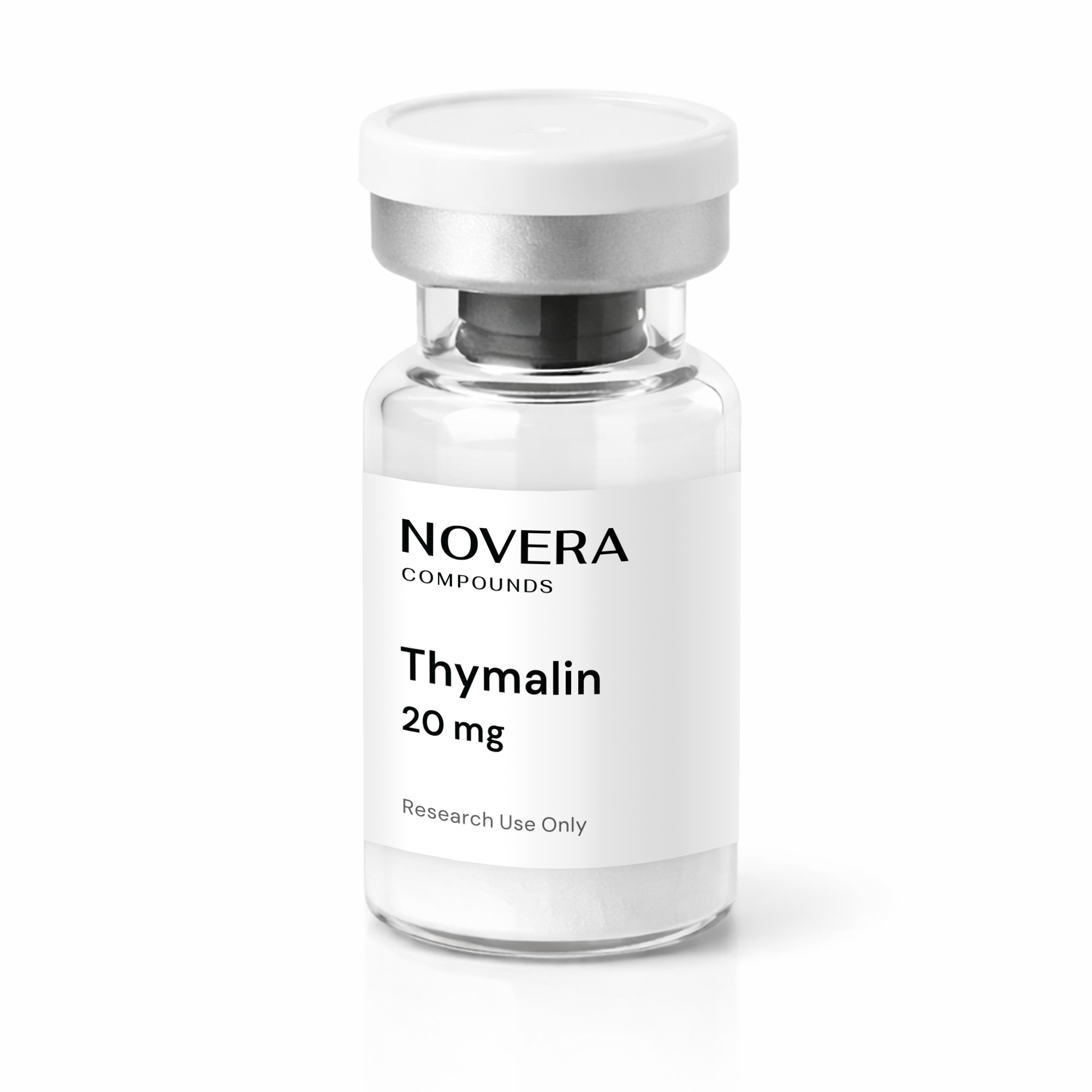
Thymalin is a complex of short peptides extracted from thymus gland tissue, studied for its organ-specific bioregulatory activity on T-cell differentiation signaling and thymic epithelial cell pathway dynamics. As a peptide bioregulator — a class of short peptides characterized by their organ-of-origin specificity — Thymalin is investigated for its capacity to interact with gene expression regulatory mechanisms in thymus-associated immune cell populations. Its complex composition distinguishes it from single-sequence synthetic peptides, providing researchers with a multi-component bioregulatory tool for thymic signaling pathway investigation.
Thymalin is studied in relation to T-cell progenitor differentiation marker expression, thymosin pathway activity, and thymic stromal cell signaling dynamics in preclinical immunological models. Researchers use it to examine how thymus-derived peptide activity influences T-cell subset marker distribution, CD4/CD8 ratio endpoint quantification, and thymic epithelial signaling cascade dynamics in controlled cell-based and in-vivo preclinical systems. These molecular endpoints support mechanistic characterization of thymic peptide involvement in adaptive immune cell lineage regulation.
Thymalin is a relevant research compound for laboratories studying age-associated thymic involution and immunosenescence pathway activity. Researchers examining the molecular markers of thymic decline — including reduced thymopoiesis signaling, altered T-cell output marker expression, and diminished thymic stromal cell activity — use Thymalin to investigate how thymus-derived peptide exposure influences these pathway endpoints in preclinical aging model systems. This supports foundational mechanistic understanding of thymic biology and age-related immune signaling dynamics.
Thymalin 20mg is manufactured by Elivena in USA GMP-certified facilities to approximately 99% purity, verified by COA documentation confirming peptide complex composition and purity grade. Each vial provides consistently characterized thymus-derived material for reproducible immunological and thymic signaling research.
Thymalin 20mg is suited for research teams investigating thymus-derived peptide bioregulator activity, T-cell lineage differentiation marker expression, and age-associated thymic involution signaling dynamics in controlled laboratory models. Laboratories studying immunosenescence pathway mechanisms, thymic epithelial cell signaling interactions, or organ-specific peptide bioregulator activity will find this compound relevant to multi-phase experimental designs. Research programs examining the molecular relationship between thymic peptide activity and T-cell subset marker progression in preclinical aging models benefit from Thymalin’s well-characterized complex composition. Produced by Elivena in USA GMP-certified facilities, each vial is COA-verified for peptide complex purity and composition.
Thymalin supports investigation of thymus-derived peptide activity on immune cell receptor expression and intracellular signaling cascade dynamics in T-cell and thymic stromal cell experimental models. Researchers quantify downstream transcription factor activity, cytokine signaling marker expression, and T-cell differentiation endpoint progression following thymic peptide exposure to characterize bioregulatory signaling mechanisms at the molecular level.
Laboratories studying age-associated immune pathway marker changes use Thymalin to examine its effects on thymopoiesis-associated signaling endpoints, T-cell subset distribution markers, and thymic stromal cell activity parameters in controlled preclinical aging models. Multi-timepoint study designs allow systematic observation of molecular marker progression across extended experimental observation windows, supporting mechanistic characterization of thymic peptide activity in immunosenescence pathway contexts.
Thymalin’s organ-specific derivation makes it a useful model compound for broader research into peptide bioregulator mechanisms — specifically how short organ-derived peptide sequences interact with gene expression regulatory pathways in corresponding tissue cell populations. Research teams studying organ-specific bioregulatory peptide class activity use Thymalin alongside other tissue-derived bioregulators to examine the specificity and mechanism of peptide-mediated gene expression modulation in controlled experimental systems.
Research using Thymalin typically employs intensive 10–20 day exposure periods followed by defined rest intervals, with protocols repeated at 3–6 month intervals across extended observation programs. The 20mg vial supports single-course or multi-course study designs, providing sufficient material for systematic molecular marker monitoring across multiple experimental phases.
Reconstitute lyophilized Thymalin 20mg with sterile bacteriostatic water or sterile saline using standard sterile laboratory technique. The peptide complex should be prepared fresh for each experimental administration where protocol design permits, to maintain complex integrity. Reconstitution volume should be determined based on the target experimental concentration specified by the study design. Use calibrated laboratory equipment for all preparation and handling steps.
Store lyophilized peptide complex at 2–8°C, protected from light and moisture, prior to reconstitution. Following reconstitution, maintain refrigeration at 2–8°C and use within the shortest timeframe consistent with the laboratory protocol to preserve peptide complex integrity. Lyophilized material does not require cold-chain shipping but should be refrigerated upon receipt. Each Elivena vial is supplied with COA documentation and handling guidance.
Novera Research delivers high-quality research peptides developed under strict manufacturing and quality-control standards. Each product is carefully synthesized, tested, and handled to ensure consistency, reliability, and transparency for advanced research applications.
High-purity, research-grade peptide synthesis
Analytical testing to verify quality and composition
Consistent batch-to-batch performance
Batch identification on every vial for traceability
Stored and shipped under controlled conditions
Research-grade dual GIP/GLP-1 peptide by NOVERA, USA-made, 99% purity, for advanced metabolic studies.
Research-grade synthetic nonapeptide supplied in 5mg format for controlled in vitro laboratory investigation.
Research-grade triple-peptide formulation offering comprehensive multi-compound analysis capabilities for advanced laboratory research protocols.
Research-grade synthetic dual-agonist peptide formulated in higher-quantity 15mg format for extended dual-receptor pathway studies and institutional peptide research in controlled laboratory environments.
This website contains information on research compounds intended for laboratory use only. You must be 21 years or older to enter and view this content. By entering, you also agree that all products are for research use only and are not intended for human consumption.
We'll send the lab results to this email address.