Micro-Injuries That Lead to Hair Loss & How to Repair
Articles
Table of contents
Small, often unnoticed stresses on the scalp can influence how hair looks and behaves over time. These tiny stresses may build up from everyday habits without you realizing it. Styling routines create repeated pressure on the same areas. Environmental exposure adds stress through sun, wind, or cold. The concept of scalp micro-injury and hair thinning describes cumulative effects rather than single dramatic events. Think of it like wearing the same shoes daily. Eventually, specific spots show wear from constant use. Your scalp experiences similar patterns from daily routines. Heat tools, tight hairstyles, and harsh brushing all create small stresses. Each individual stress seems minor in the moment. However, repeated application to the same areas builds effects over weeks and months.
Understanding iron deficiency hair shedding provides context for overall hair wellness patterns. Multiple factors work together to influence hair appearance.
What Counts as a Scalp Micro-Injury?
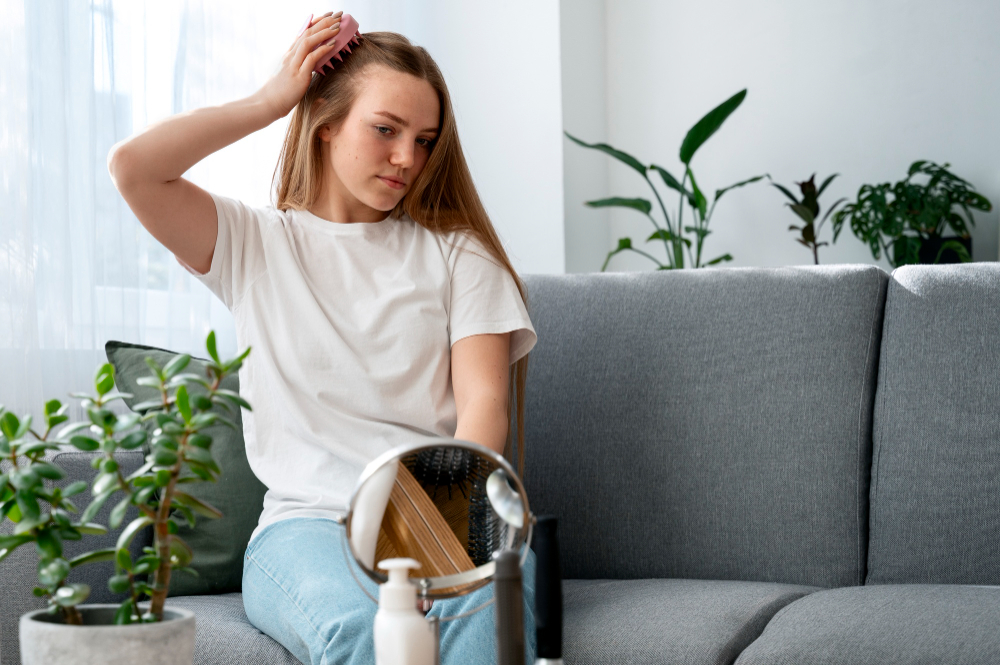
A micro-injury is a small, repeated stress on the scalp. These are not dramatic wounds or visible damage. Instead, they represent minor irritations that happen frequently. Tight hairstyles pull on follicles from the outside. Ponytails, buns, and braids create constant tension. This tension affects where hair emerges from the scalp. The pulling force stresses the follicle opening continuously. Harsh brushing creates friction across the scalp surface. Yanking through tangles pulls on individual hair strands. Each pull creates small stress at the root.
Hot tools apply direct heat to hair and scalp. Blow dryers, flat irons, and curling wands all reach high temperatures. Heat transfers from the tool to the hair shaft and nearby skin. Friction occurs when hair rubs against surfaces repeatedly. Rough towel drying creates significant friction. Tight headbands or hats rub against the same spots daily. These stresses may gradually influence hair’s appearance over time. No single instance causes obvious damage. The cumulative effect matters more than individual events.
How Scalp Micro-Injury & Hair Thinning Happens
Ongoing micro-stress may affect hair density or texture gradually. The follicle experiences constant pressure from external forces. This pressure can influence how the follicle functions over time. Think of it like bending a piece of wire repeatedly. Eventually, the wire weakens at the bend point. Follicles respond similarly to repeated stress at specific locations. Early signs people may notice include changes in hair texture. Strands might feel rougher or less smooth than before. Some areas may show shorter broken pieces among longer hair. This indicates breakage rather than natural shedding. Scalp micro-injury & hair thinning develops through consistent patterns rather than sudden changes. You might notice your part line appears slightly wider. The hairline could look less defined in areas of tension. These changes reflect general wellness patterns rather than medical diagnoses. Your scalp shows the effects of how you treat it daily. Protective care creates different outcomes than harsh treatment. Individual response varies based on hair characteristics and sensitivity.
Everyday Habits That May Contribute to Micro-Injuries
Gentle versus harsh brushing makes a significant difference. Gentle brushing means starting at the ends and working upward. You detangle small sections rather than yanking from roots to tips. Harsh brushing pulls through all tangles in one motion. This creates maximum stress on every snag. Tight hairstyles include any style that pulls hair firmly. High ponytails create tension at the crown and temples. Slicked-back buns pull from the entire front hairline. Braids generate tension along the entire length of styled hair. The tighter the style, the greater the stress. Frequent pulling or tension happens with repeated styling choices. Wearing the same tight style every day intensifies the effects.
Your scalp never gets relief from the pulling force. Heat styling involves any hot tool application. Flat ironing requires direct contact at high temperatures. Curling involves wrapping hair around heated barrels. Blow drying directs hot air across the entire scalp. Rough towel-drying creates friction when you rub vigorously. The towel texture catches on hair strands. Aggressive rubbing multiplies the friction effect. Each of these creates repeated stress to the same areas. Understanding helps you make gentler choices naturally.
Understanding Hair Thinning Due Scalp Micro-Injury in Daily Life
Thinning can appear visually in several distinct ways. A wider part line shows more scalp between hair sections. The part gradually expands from repeated tension or friction. Shorter broken pieces appear scattered among longer strands. These breaks indicate structural weakness at specific points. Uneven texture develops when some areas face more stress. Hair around the temples might feel different than the back. The front hairline could show a finer texture than the sides. Hair thinning due to scalp micro-injury looks different from other patterns. It typically affects areas under most mechanical stress.
Edges and hairlines show effects from tight styling. Crown areas thin from ponytail tension points. These signs differ between individuals based on habits. Someone who always wears high buns shows different patterns. A person who uses flat irons daily displays heat-related changes. Your specific routine creates your unique stress pattern. Recognizing your patterns helps you identify causes. Once you understand the source, adjustments become clearer.
How to Repair and Support a Healthier Scalp
Simple, gentle steps can reduce friction and pressure. Reducing friction means using softer materials and movements. Pat your hair dry instead of rubbing vigorously. Let hair air-dry partially before using any tools. Loosening hairstyles removes constant tension from follicles. Wear your hair down more often if possible. Choose looser ponytails that sit lower on your head. Rotate between different styles to vary stress points. Softer handling techniques protect hair throughout daily care. Detangle gently starting from the ends upward. Use your fingers to separate major tangles first. Follow with a wide-tooth comb before brushing. Apply products with gentle pressing rather than rough rubbing. Each positive change reduces cumulative stress on your scalp. Your follicles respond to gentler treatment over time. The scalp environment improves when irritation decreases. Hair produced under better conditions appears healthier naturally. These adjustments don’t require expensive products or treatments. They simply need awareness and consistent application. Small changes in technique make meaningful differences.
When Additional Support Might Be Helpful
Ongoing thinning despite gentler care deserves attention. If you’ve improved your habits but see continued changes, consider consulting someone. Persistent discomfort suggests something beyond simple mechanical stress. Your scalp shouldn’t hurt from normal gentle care. Repeated scalp changes in the same areas warrant evaluation. This could indicate something beyond styling stress alone. Professional input helps distinguish between different causes. They can evaluate whether habits fully explain your patterns. Other factors sometimes contribute alongside mechanical stress. Nutritional status, hormonal balance, and skin conditions all matter. Keep language supportive rather than alarming throughout. Many factors influence hair appearance simultaneously. Variations between individuals are completely normal. What concerns you might not bother someone else. However, your comfort and confidence matter significantly. Persistent worries deserve acknowledgment and attention. Professional guidance provides personalized insights for your situation. They understand how various factors work together. Early awareness often provides more options for support. Final Thoughts on Protecting Your Scalp Daily
Your daily choices shape how your scalp and hair respond over time. Small adjustments in handling techniques create meaningful improvements. Gentler care costs nothing but awareness and patience. Remember that hair reflects how you treat it consistently. No single day determines your results. Instead, weeks and months of choices build visible patterns. Listen to what your scalp tells you through comfort and appearance. Discomfort signals the need for change. Progress happens gradually, matching the pace of hair growth itself. Celebrate improvements rather than expecting instant transformations. Your commitment to gentler habits supports long-term hair wellness naturally.
FAQs
What is the most common cause of scalp micro-injuries?
Tight hairstyles like ponytails, buns, and braids are the most common cause, as they create constant tension on the same areas of the scalp daily.
Can tight hairstyles really lead to hair thinning?
Yes, repeated tension from tight styles can stress follicles over time, potentially affecting hair density in the areas under the most pressure.
How long does it take to notice changes from micro-injuries?
Changes typically develop gradually over several months to years of repeated stress, as the cumulative effect builds slowly over time.
Are micro-injuries permanent?
Many effects from mechanical stress can improve with gentler care habits, though results depend on the duration and severity of stress.
Can improving my hair care routine help reduce micro-injuries?
Yes, switching to gentler handling techniques, looser styles, and reduced heat exposure can significantly decrease ongoing stress to your scalp.
$839.99
This product has multiple variants. The options may be chosen on the product page
Save with sets
Unlock savings on bundles and elevate your online experience today!
Age Verification Required
This website contains information on research compounds intended for laboratory use only. You must be 21 years or older to enter and view this content. By entering, you also agree that all products are for research use only and are not intended for human consumption.

 130
130