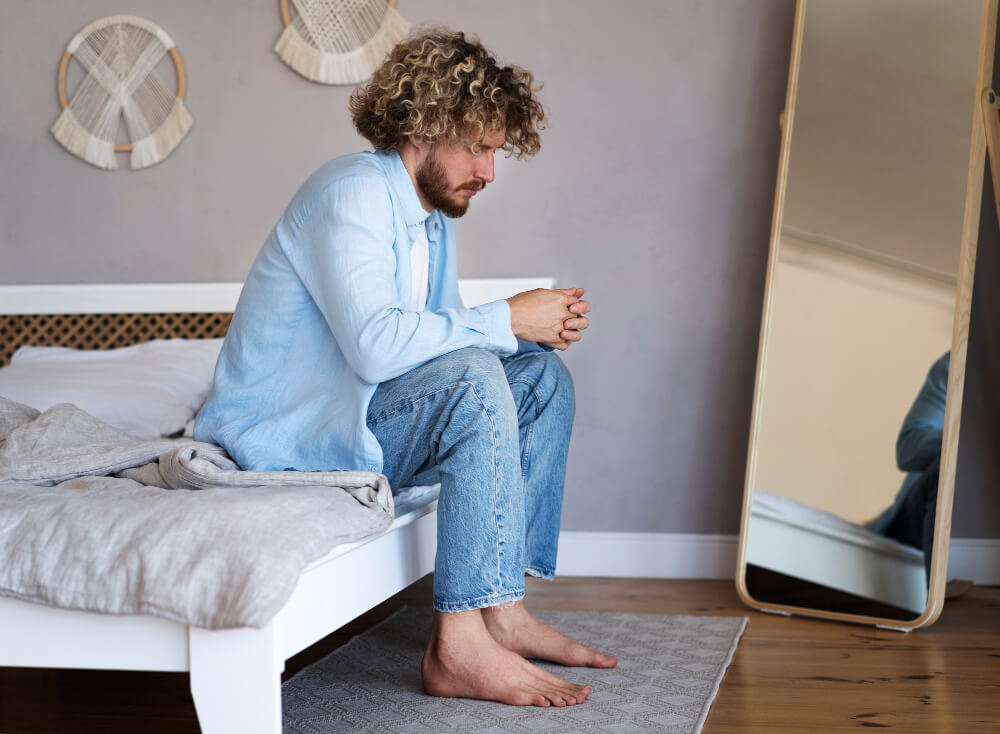
Stress means your body is reacting to pressure, challenges, or changes in your life. Anxiety is worry or fear about what might happen in the future. Both affect how your body responds physically, including during sexual activity. When stress levels rise, your body shifts into survival mode. This affects blood flow, hormone release, and mental focus. These changes can influence erection quality, timing, or consistency in ways that feel frustrating or confusing. Understanding the relationship between stress and erectile dysfunction helps you recognize that these patterns are common, temporary, and often reversible. Many healthy men experience these changes at different points in their lives. The connection between your mind and body plays a powerful role in sexual response, and recognizing this link is the first step toward improvement.
How the Body Creates an Erection Under Normal Conditions
Nerves, blood flow and erectile dysfunction, and mental focus work together to create an erection. When sexual interest builds, your brain sends signals down through your spinal cord to the penis. These signals tell blood vessels to widen significantly. More blood flows into spongy tissue, creating pressure that makes the penis firm. Hormones like testosterone support desire and physical readiness. Relaxation helps this entire process unfold naturally. When your body feels safe and calm, the systems needed for sexual response activate easily. This process happens automatically when stress levels stay low and blood can move freely through flexible vessels.
Why Stress Disrupts Sexual Response
The stress response activates what scientists call “fight-or-flight.” Your body prepares to handle danger by releasing stress hormones like cortisol and adrenaline. These hormones increase heart rate and redirect blood away from non-essential functions. Sexual response becomes less of a priority when your body thinks survival is at stake. Stress hormones also reduce relaxation and interfere with the signals needed for arousal. Work pressure creates this response. Major life changes trigger it. Relationship tension can activate it. Short-term stress creates temporary effects that fade when the situation resolves. Long-term stress creates patterns that persist because your body stays in heightened alert mode for extended periods.
The Link Between Anxiety and Sexual Performance
Overthinking or fear-based thoughts interrupt natural arousal patterns. Performance anxiety means worrying about your ability to satisfy a partner or achieve an erection. This worry creates mental distraction that pulls focus away from physical sensations and pleasure. Anxiety affects both mental focus and physical responses simultaneously. When your mind fixates on potential failure, it becomes harder to stay present during intimacy. Your body mirrors this tension by tightening muscles and restricting blood flow. Even men who have never experienced erectile difficulties can develop anxiety-related changes after one challenging experience. This connection between mental state and physical response is stronger than many people realize.
Emotional Cycles That Worsen Symptoms
One difficult experience can create worry during the next sexual encounter. This creates a cycle that reinforces itself over time. Tension builds before intimacy because you remember previous difficulties. Reduced response happens because tension interferes with arousal. Increased worry follows because the pattern seems to be repeating. Repeated difficulty strengthens the cycle further. Each experience adds to anxiety about future encounters. These cycles are common among men of all ages and health levels. The pattern feels overwhelming, but it’s reversible with awareness and specific strategies. Breaking the cycle starts with understanding that emotional responses are creating physical effects rather than underlying disease causing problems.
How Physical Tension Affects Blood Flow
Stress creates muscle tension throughout your body, including in blood vessel walls. This tension reduces circulation efficiency. Blood flow to the penis must remain steady and increase rapidly for a healthy erection to form. When stress keeps your body tense, vessels cannot widen as easily. Vasoconstriction means blood vessels narrow instead of expanding. This narrowing happens as part of the stress response and limits how much blood reaches erectile tissue. Even when sexual interest exists mentally, physical tension can prevent the body from responding fully. Chronic stress keeps this tension present more often, which makes sexual response less reliable over time.
Can Stress and Anxiety Cause Erectile Dysfunction
Can stress and anxiety cause erectile dysfunction even in otherwise healthy men? Yes, these emotional states can interrupt both desire and physical response without any underlying health conditions being present. Stress affects the brain-body connection that controls sexual function. When anxiety rises, your nervous system prioritizes survival responses over sexual responses. This happens through hormone changes that reduce testosterone and through nerve signals that redirect blood flow away from the penis. Emotional triggers can appear suddenly and create immediate physical effects. Your body cannot distinguish between actual danger and perceived stress, so work pressure creates the same physiological response as a physical threat. This means that mental and emotional factors alone can cause erectile changes.
When Mood-Related Issues Influence Sexual Desire
Depression, burnout, or chronic worry reduce sexual interest significantly. Can stress and depression cause erectile dysfunction through desire changes? Yes, when mental health struggles reduce your overall interest in activities you used to enjoy, sexual desire often decreases as well. This creates a difference between desire and performance. Desire means mental interest in sexual activity. Performance means the physical ability to achieve and maintain an erection. Depression primarily affects desire first by reducing energy, motivation, and pleasure. Lower desire then affects performance timing because arousal happens more slowly when interest is low. Recognizing this difference helps identify whether emotional well-being needs attention alongside any physical concerns.
Stress-Driven Lifestyle Habits That Affect Erectile Function
Poor sleep happens when stress keeps your mind active at night. This reduces hormone production needed for sexual health. Alcohol use often increases during stressful periods as a coping mechanism. Heavy drinking affects nerve signals and blood flow. Nicotine constricts blood vessels and accelerates vascular damage. Low physical activity becomes more common when stress drains your energy. Each of these habits influences hormones, circulation, and overall energy levels. These conditions accumulate gradually, and the treatment for stress-related erectile changes often includes addressing these lifestyle patterns. The connection works both ways—stress creates unhealthy habits, and those habits then worsen both stress levels and sexual function.
How to Break the Stress–ED Cycle
Relaxation techniques help calm your nervous system deliberately. Deep breathing routines activate the parasympathetic nervous system, which supports sexual response. Progressive muscle relaxation reduces physical tension throughout your body. Communication with a partner reduces performance anxiety by creating shared understanding. When you discuss concerns openly, the pressure to perform perfectly decreases. Improving emotional well-being through stress management creates space for physical response to return naturally. The cycle breaks when emotional patterns change, which then allows physical health and sexual performance to improve. These steps work together, and combining several approaches typically produces better results than focusing on just one area.
When Stress Hides an Underlying Health Condition
Sometimes erectile dysfunction signals blood pressure changes, cardiovascular disease, or metabolic factors like low testosterone vs erectile dysfunction differences. While stress creates real physiological effects, persistent symptoms may indicate that additional medical conditions need evaluation. Sexual function serves as an early warning system for cardiovascular health because penile arteries are so small. Damage shows up there before affecting larger vessels in the heart or brain. Persistent symptoms lasting several months deserve professional assessment even when stress seems like the obvious cause. This awareness helps catch serious conditions early rather than assuming all erectile changes come purely from emotional factors.
When to Consider Speaking With a Professional
Signs that professional consultation would help include symptoms persisting for several weeks despite stress reduction efforts. If erectile changes worsen over time rather than improving, evaluation makes sense. A typical conversation at a clinic includes simple questions about when symptoms began, what life stressors you’re facing, and whether any patterns connect stress levels to sexual function. Basic tests might check hormone levels, blood pressure, or cardiovascular health. The evaluation process is straightforward and stigma-free. Healthcare providers understand that stress-related erectile changes are common and treatable. Early conversations lead to more options, whether the solution involves stress management techniques, erectile dysfunction medications online, or addressing underlying health factors.
FAQs
How do stress and anxiety affect erections?
Stress activates fight-or-flight responses that redirect blood away from the penis, release hormones that reduce testosterone, and create tension that prevents the relaxation needed for arousal.
Can worry alone cause erection problems?
Yes, worry tightens muscles throughout your body including in blood vessel walls, reduces mental focus on pleasure, and triggers the same stress hormones that interrupt sexual response.
Can stress and depression cause erectile dysfunction?
Can stress and depression cause erectile dysfunction through both emotional and physical pathways? Yes, depression reduces sexual desire and energy while stress creates hormone changes and blood flow restrictions that affect physical performance.
Can these issues happen even if I’m healthy?
Yes, even men with excellent physical health experience stress-driven erectile changes because the mind-body connection affects sexual response regardless of cardiovascular or metabolic health.
How do I know if my issue is physical or emotional?
If erectile changes coincide with stressful life events and you have morning erections or can achieve erections through masturbation, emotional factors are likely primary causes.
When should I seek support?
Seek support when patterns persist for more than a few weeks, when stress-related erectile changes worsen over time, or when symptoms significantly affect your confidence or relationships.
Kalaitzidou, I., Venetikou, M. S., Konstadinidis, T., Artemiadis, A. K., Chrousos, G., & Darviri, C. (2014). Stress management and erectile dysfunction: A pilot comparative study. Andrologia, 46(6), 698-702. https://pubmed.ncbi.nlm.nih.gov/23822751/
Liu, T., Xu, Y., Wang, Z., Zhong, S., Huang, Y., Zhao, J., & Wu, K. (2022). Erectile dysfunction in patients with anxiety disorders: A systematic review. The Journal of Sexual Medicine, 19(5), 721-730. https://pmc.ncbi.nlm.nih.gov/articles/PMC8964411/
$839.99
This product has multiple variants. The options may be chosen on the product page
Save with sets
Unlock savings on bundles and elevate your online experience today!
Age Verification Required
This website contains information on research compounds intended for laboratory use only. You must be 21 years or older to enter and view this content. By entering, you also agree that all products are for research use only and are not intended for human consumption.

 130
130