Subcategories
This category is organized into three subcategories, each addressing a distinct domain of tissue repair and regenerative signaling research:
- Wound Healing Peptides — compounds studied in fibroblast and keratinocyte migration assays, growth factor receptor activation models, and ECM deposition pathway research in wound biology cell systems
- Musculoskeletal & Joint Repair Peptides — compounds studied in chondrocyte and osteoblast signaling models, cartilage ECM marker profiling, and bone formation pathway research in skeletal cell line systems
- Cardiovascular & Vascular Repair Peptides — compounds studied in endothelial cell proliferation assays, VEGF and angiogenesis pathway models, and vascular smooth muscle cell signaling research
Healing & Regenerative Peptide Compounds: Research Catalog
BPC-157 — 5 mg
| Sequence |
Pentadecapeptide: Gly-Glu-Pro-Pro-Pro-Gly-Lys-Pro-Ala-Asp-Asp-Ala-Gly-Leu-Val (15 AA) |
| Molecular Weight |
1,419.56 Da |
| Format |
Lyophilized powder, 5 mg vial |
| Purity |
>=98% (HPLC verified, COA on file) |
| Research Classification |
Cytoprotective signaling peptide derived from gastric juice protein BPC; studied in VEGFR2, EGFR, and FAK receptor interaction assays, NO-synthase pathway activation models, fibroblast and endothelial cell migration and proliferation marker profiling, and ECM remodeling research in wound biology and tissue repair cell systems |
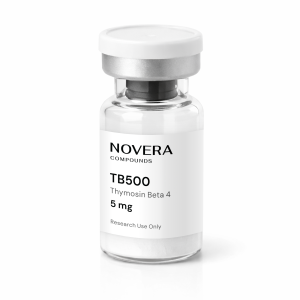
Thymosin Beta-4 (TB-500) — 10 mg
| Sequence |
43-residue G-actin sequestering peptide: Ac-SDKPDMAEIEKFDKSKLKKTETTLKQEYDTLEKEAKKNNE-OH |
| Molecular Weight |
4,963.50 Da |
| Format |
Lyophilized powder, 10 mg vial |
| Purity |
>=98% (HPLC verified, COA on file) |
| Research Classification |
G-actin sequestering thymic peptide; studied in actin polymerization dynamics, WASP/N-WASP interaction models, keratinocyte and endothelial cell migration assays, angiogenesis pathway marker profiling, and anti-inflammatory cytokine regulation research in wound healing cell systems |
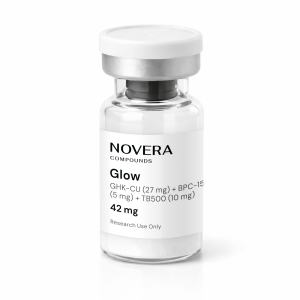
GHK-Cu (Copper Peptide) — 50 mg
| Sequence |
Copper-binding tripeptide complex: Gly-His-Lys · Cu(2+) |
| Molecular Weight |
403.95 Da (copper complex) |
| Format |
Lyophilized powder, 50 mg unit |
| Purity |
>=98% (HPLC verified, COA on file) |
| Research Classification |
Copper-binding tripeptide; studied in fibroblast collagen synthesis pathway assays, TGF-beta receptor and SPARC interaction models, MMP activity profiling in ECM remodeling research, and Nrf2-mediated antioxidant signaling in wound repair cell biology |
PDGF-BB Peptide Fragment — 0.5 mg
| Sequence |
Synthetic peptide corresponding to PDGF-BB receptor-binding loop region; sequence confirmed by MS — consult COA for lot-specific details |
| Molecular Weight |
~1,200-1,600 Da (fragment-dependent) |
| Format |
Lyophilized powder, 0.5 mg vial |
| Purity |
>=95% (HPLC verified, COA on file) |
| Research Classification |
PDGF-BB derived receptor-binding peptide fragment; studied in PDGFR-beta binding competition assays, pericyte and fibroblast activation marker research, PI3K-Akt and MAPK downstream signaling cascade profiling, and angiogenesis co-factor pathway investigation in vascular biology research |
Research Applications: Four Areas of Laboratory Investigation
- Growth Factor Receptor Activation and Cell Migration Pathway Research
BPC-157 has the most extensively documented growth factor receptor interaction profile in the published wound biology literature. Studies have characterized its associations with VEGFR2 phosphorylation in endothelial cell models, EGFR activation in epithelial cell line systems, and focal adhesion kinase (FAK) signaling dynamics in fibroblast scratch assay models. Published assays use receptor phosphorylation Western blot, transwell migration quantification, and scratch wound closure rate measurement as primary endpoints. PDGF-BB peptide fragments have been studied in parallel PDGFR-beta binding competition and pericyte activation assays. All migration and proliferation data are generated in defined in vitro cell systems under controlled laboratory conditions.
- Actin Cytoskeletal Dynamics and Keratinocyte Migration Assays
Thymosin Beta-4’s G-actin sequestering mechanism positions it as the primary experimental tool for studying actin dynamics in wound-associated cell migration research. Published studies have used primary keratinocyte and HaCaT cell line models to characterize G-actin/F-actin ratio dynamics by DNase I inhibition assay and fluorescence microscopy, WASP/N-WASP interaction profiling in actin nucleation pathway research, and lamellipodia formation dynamics in live-cell TIRF microscopy under defined TB-500 concentration conditions. TB-500 has also been studied in endothelial cell tubulogenesis assays using Matrigel-based angiogenesis models, with tube length and branching point quantification as primary angiogenic marker endpoints.
- Collagen Synthesis, ECM Deposition, and MMP Activity Profiling
GHK-Cu is among the most studied compounds in published literature examining collagen synthesis and ECM remodeling pathway dynamics in fibroblast and dermal cell systems. Published assays have profiled procollagen type I and III N-propeptide (PINP, PIIINP) expression in primary fibroblast and NIH3T3 cell models using ELISA-based quantification, TGF-beta receptor downstream signaling dynamics (Smad2/3 phosphorylation, CTGF expression), and matrix metalloproteinase activity (MMP-1, MMP-2, MMP-9) by gelatin zymography. These assays characterize peptide interactions with ECM remodeling pathway components at defined molecular nodes in vitro.
- Angiogenesis Pathway Marker Profiling and Endothelial Cell Biology
Multiple compounds in this category appear in published angiogenesis research. VEGFR2 phosphorylation assays using HUVEC and HMEC-1 endothelial cell line models represent the primary functional endpoint for angiogenic pathway investigation, alongside tube formation assays in Matrigel matrix systems and endothelial cell proliferation quantification by BrdU incorporation or Ki-67 immunostaining. BPC-157 and TB-500 have both been studied in these endothelial model systems, with published studies characterizing their effects on VEGF expression marker dynamics and endothelial migration rate in scratch assays. These in vitro assays characterize angiogenesis-associated signaling pathway behavior without reference to tissue vascularization outcomes in organisms.
Selecting the Right Compound for Your Research Protocol
Researchers designing studies in wound biology, ECM remodeling, or angiogenesis pathway investigation typically evaluate compound selection based on the specific signaling node under investigation — growth factor receptor interaction (BPC-157, PDGF-BB fragment), actin cytoskeletal dynamics (TB-500), ECM synthesis and remodeling (GHK-Cu), or endothelial angiogenesis pathway profiling (BPC-157, TB-500) — molecular stability in serum-containing fibroblast and endothelial cell culture media, and COA-verified purity with endotoxin data, particularly relevant for primary cell and organotypic culture applications.
Novera provides complete product specifications for each compound including molecular weight, sequence, storage conditions, and available presentation formats. Researchers are encouraged to review compound data sheets and cross-reference with primary wound biology and regenerative signaling literature before finalizing protocols. Novera does not provide experimental design guidance, dosing parameters, or outcome interpretation.
Institutional procurement offices and principal investigators with multi-compound or volume supply requirements are invited to contact Novera’s research supply team to confirm batch availability, lot consistency documentation, and GMP certification status for each referenced material.
Supply and Quality Standards
All compounds in this category are procured from USA-based GMP-certified manufacturing facilities. Standard quality documentation and protocols include:
- Certificate of Analysis (COA) for every batch confirming molecular identity and HPLC-verified purity
- Mass spectrometry sequence and molecular weight confirmation for all synthesized peptide compounds
- Fragment sequence and boundary documentation for PDGF-BB peptide fragment lots
- Copper complex stoichiometry confirmation for GHK-Cu preparations
- Endotoxin testing (LAL method) available on request — recommended for primary cell and organotypic tissue repair applications
- Sterility certification for applicable lyophilized formulations
- Temperature-controlled cold-chain shipping for all stability-sensitive regenerative peptide materials
- Full compliance with USA regulatory frameworks governing research compound distribution
Novera does not supply compounds for human or veterinary administration. All purchase documentation classifies materials as research and laboratory use only. Institutional and bulk procurement arrangements are available subject to qualification review.
Healing & Regenerative Peptides: Research Classification and Molecular Context
In cell biology and regenerative medicine research literature, healing and regenerative peptides refer to amino acid sequences studied for their interactions with signaling pathways associated with cellular repair, tissue remodeling, and vascular biology at the molecular level. This category encompasses cytoprotective and growth factor receptor-interacting sequences such as BPC-157, studied in VEGFR2 and FAK pathway assays; actin-regulatory peptides such as Thymosin Beta-4, studied in cytoskeletal dynamics and angiogenesis models; ECM-modulating sequences such as GHK-Cu, studied in collagen synthesis and MMP activity research; and growth factor subunit fragments studied in receptor binding competition and downstream signaling cascade models.
Classification within this category is based on documented molecular interaction profiles in published cell biology and regenerative research literature. No compound is represented as a wound healing agent, tissue repair treatment, or regenerative therapy of any kind. All materials are supplied as experimental research tools for mechanistic investigation in qualified laboratory settings by trained scientific personnel operating under appropriate institutional frameworks.

 132
132