Your cart is empty.
Your cart is empty.


99.2% On-Time Delivery
Tracked International Shipping
Refund Within 28 Days
Secure, Encrypted Checkout
Each peptide batch is tested and verified to meet or exceed 98–99% purity (HPLC).
Store 2–8 °C (≤–20 °C long-term). RT exposure during transport acceptable. Protect from light.
99.2% On-Time Delivery
Tracked International Shipping
Refund Within 28 Days
Secure, Encrypted Checkout
$45.00
This product is available by prescription only
This product does not require a prescription
Out Of Stock
Each peptide batch is tested and verified to meet or exceed 98–99% purity (HPLC).
Store 2–8 °C (≤–20 °C long-term). RT exposure during transport acceptable. Protect from light.
The product is delivered in powdered (lyophilized) form and must be properly reconstituted prior to research use.
Selank is a synthetic heptapeptide derived from tuftsin — a tetrapeptide fragment of immunoglobulin G studied for immunomodulatory receptor interaction activity. Selank’s sequence extends the tuftsin motif with additional residues that confer increased plasma stability and central nervous system penetration characteristics in preclinical models. This structural relationship to an endogenous immunomodulatory peptide makes Selank a relevant model compound for studying the intersection of neuroimmune signaling pathways and central nervous system receptor interaction dynamics in controlled experimental systems.
Selank is studied for its modulatory activity across multiple neurotransmitter receptor systems simultaneously. Research examines its interaction with GABAergic pathway signaling dynamics — including GABA-A receptor activity marker expression — alongside serotonergic and dopaminergic receptor pathway modulation in preclinical central nervous system models. This multi-system receptor interaction profile makes Selank relevant to laboratories investigating how tuftsin-derived peptide sequences influence neurotransmitter signaling balance and downstream intracellular marker expression across GABAergic, serotonergic, and dopaminergic pathway systems within the same experimental model.
Selank is studied in relation to brain-derived neurotrophic factor (BDNF) pathway marker expression — BDNF being a key neurotrophin involved in synaptic plasticity regulatory signaling, dendritic growth marker activity, and long-term potentiation pathway dynamics. Researchers examining the relationship between tuftsin-derived peptide exposure and BDNF signaling cascade endpoint changes use Selank to characterize neurotrophin pathway marker activity in controlled preclinical neuronal model systems. These endpoints support mechanistic investigation of peptide-mediated neuroplasticity signaling dynamics.
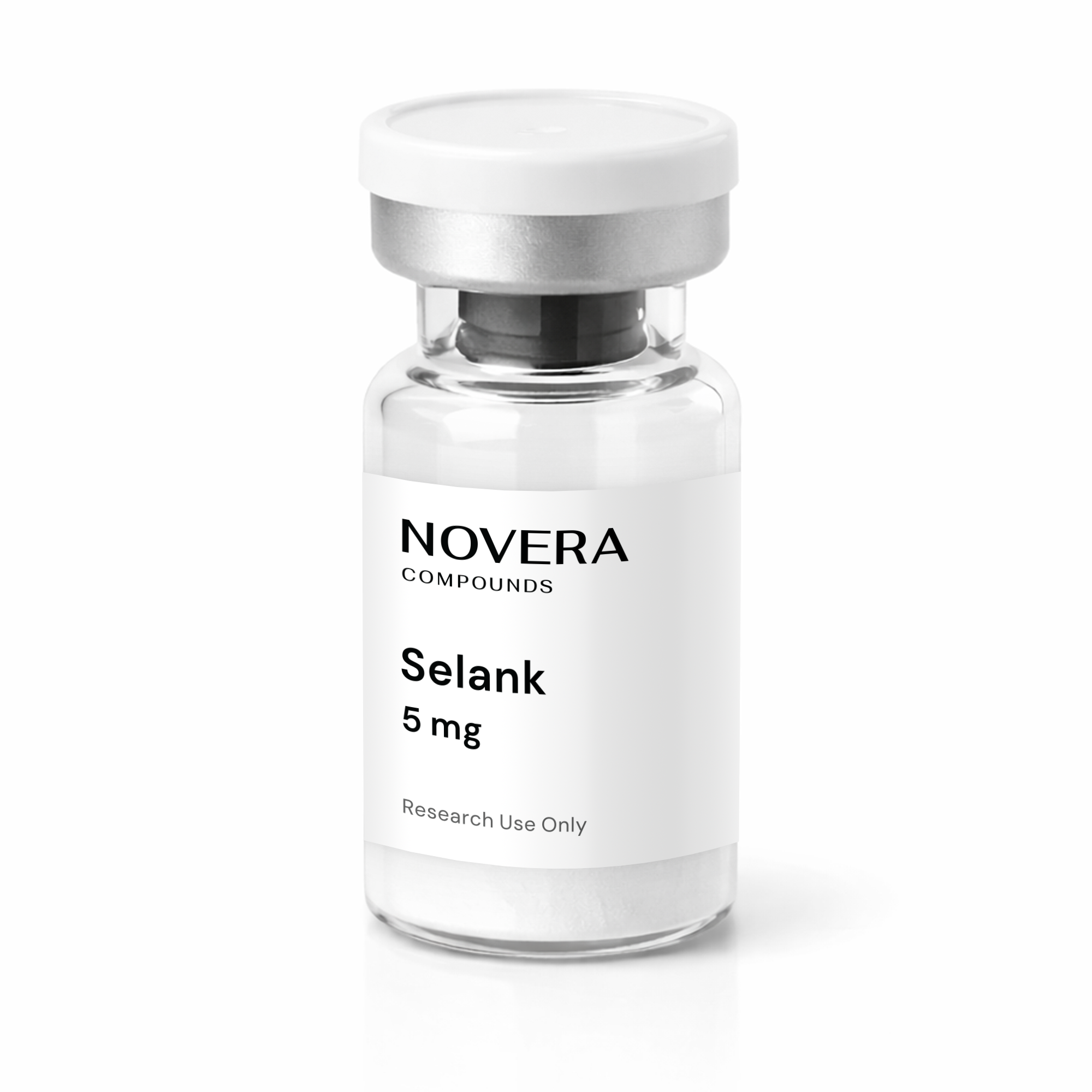
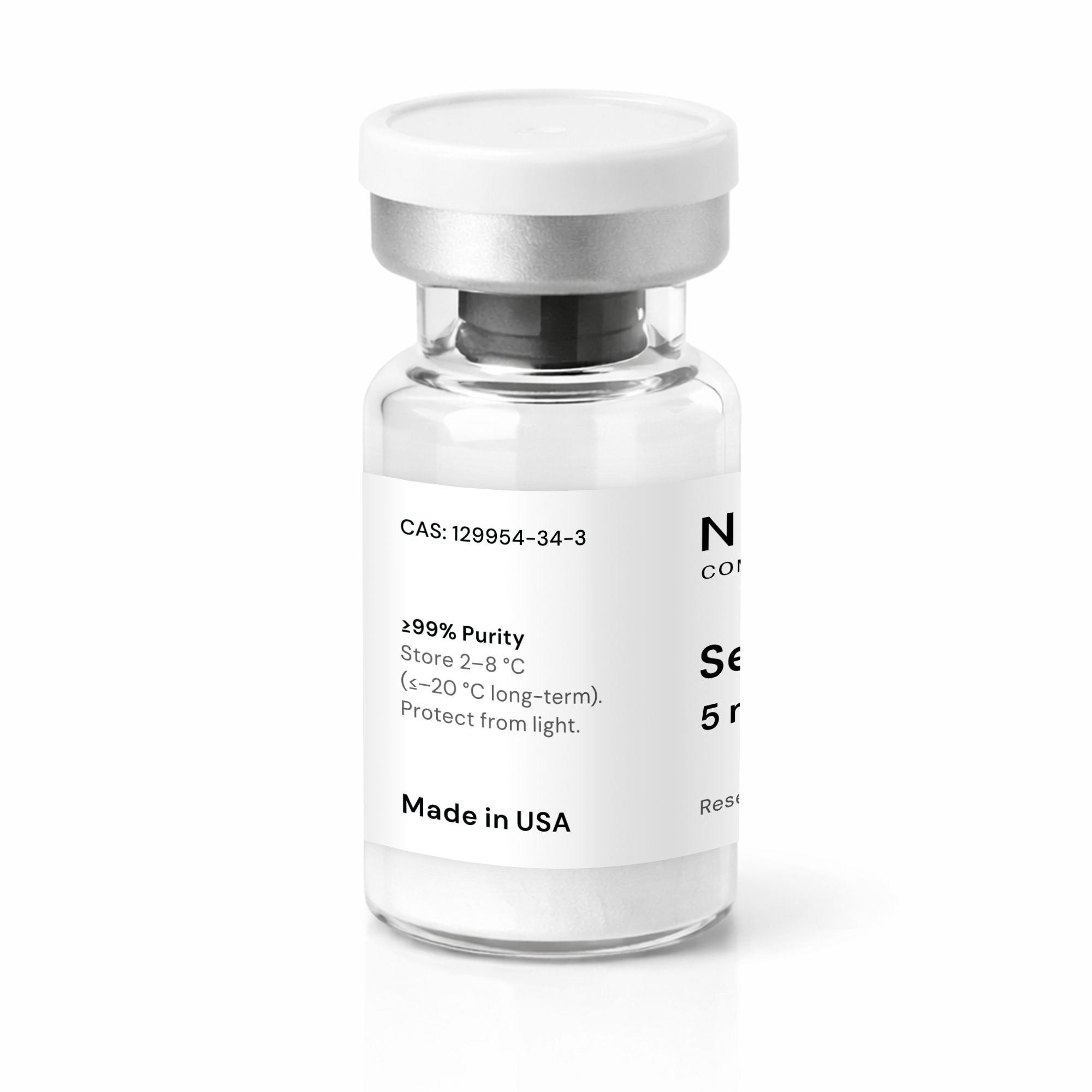
Novera supplies Selank 5mg sourced from USA GMP-certified manufacturing facilities, verified to greater than 99% purity by HPLC and independent third-party COA documentation. Each vial confirms complete heptapeptide sequence identity, purity grade, and batch-specific quality control data — providing research laboratories with consistent, pharmaceutical-grade material for advanced central nervous system peptide pharmacology and neuroimmune signaling research.
Selank 5mg is suited for research teams investigating tuftsin-derived peptide activity on neurotransmitter receptor signaling dynamics, neurotrophin pathway marker expression, and neuroimmune interaction mechanisms in controlled preclinical and in-vitro models. Laboratories studying GABAergic receptor modulation, serotonergic and dopaminergic pathway marker activity, or BDNF expression endpoint quantification will find this heptapeptide relevant to mechanistic study designs. Research programs examining peptide-mediated modulation of stress-response pathway signaling markers, synaptic plasticity regulatory endpoint dynamics, or tuftsin receptor interaction profiles use Selank as a structurally defined reference compound for central nervous system peptide pharmacology investigations. Novera supplies Selank 5mg sourced from USA GMP-certified manufacturing facilities, with each vial COA-verified for greater than 99% purity and sequence identity.
Selank supports in-vitro and preclinical investigation of neurotransmitter receptor pathway interaction dynamics across GABAergic and serotonergic systems. Researchers quantify GABA-A receptor activity marker expression, serotonin transporter pathway signaling changes, and downstream intracellular cascade dynamics following tuftsin-derived peptide exposure in neuronal cell line and primary culture experimental models. Multi-timepoint designs allow systematic characterization of neurotransmitter pathway marker progression across defined observation windows.
Laboratories studying neurotrophin pathway dynamics use Selank to examine BDNF mRNA expression marker changes, TrkB receptor phosphorylation cascade activity, and synaptic plasticity regulatory endpoint progression in controlled preclinical neuronal models. Research quantifying the relationship between tuftsin-derived peptide exposure and BDNF pathway signaling activity contributes to mechanistic understanding of peptide-mediated neurotrophin regulatory dynamics in central nervous system experimental systems.
Selank’s tuftsin-derived structural origin makes it relevant for studies examining neuroimmune signaling pathway interaction dynamics. Research teams investigating the intersection of immunomodulatory peptide receptor activity and central nervous system neurotransmitter pathway marker expression use Selank to characterize peptide-mediated neuroimmune signaling in preclinical models — contributing to mechanistic understanding of how tuftsin-sequence peptides interact with immune-neural pathway interface dynamics.
Reconstitute lyophilized Selank 5mg with sterile water or saline using standard sterile laboratory technique. Intranasal administration is frequently studied in preclinical models due to direct central nervous system delivery characteristics; subcutaneous routes are also used for comparative pharmacokinetic study designs. Reconstitution volume should be determined based on the target experimental working concentration and administration route specified by the study protocol. Typical research concentrations range from 250–500mcg per administration depending on the model system and signaling endpoint under investigation.
Store lyophilized peptide at 2–8°C, protected from light and moisture, prior to reconstitution. Following reconstitution, maintain immediate refrigeration at 2–8°C to preserve heptapeptide integrity. Use within the timeframe specified in the laboratory protocol. Each vial supplied by Novera includes COA documentation and detailed reconstitution handling guidance.
Laboratory studies using Selank typically span 2–8 weeks depending on the neurotransmitter pathway endpoints and neuroplasticity marker dynamics under investigation. Short-term protocols examining acute receptor pathway marker activity may yield measurable endpoint data within days to one week in preclinical experimental models. Extended protocols examining cumulative BDNF pathway expression changes, synaptic plasticity marker progression, or neuroimmune signaling dynamics over multi-week observation windows allow systematic characterization of longer-term peptide-receptor interaction consequences. All experimental outcomes should be documented systematically at defined intervals for reproducible research records.
Novera Research delivers high-quality research peptides developed under strict manufacturing and quality-control standards. Each product is carefully synthesized, tested, and handled to ensure consistency, reliability, and transparency for advanced research applications.
High-purity, research-grade peptide synthesis
Analytical testing to verify quality and composition
Consistent batch-to-batch performance
Batch identification on every vial for traceability
Stored and shipped under controlled conditions
Research-grade cathelicidin-derived peptide formulated for experimental immune-related research in controlled laboratory environments.
Research-grade synthetic dual-peptide formulation combining amylin analog and GLP-1 receptor agonist for dual-mechanism pathway studies and combination peptide research in controlled laboratory environments.
Research-grade synthetic peptide formulated in mid-range 10mg quantity for cellular migration studies and peptide actin-binding research in controlled laboratory environments.
Research-grade synthetic pentadecapeptide designed for controlled laboratory peptide studies and institutional research programs.
This website contains information on research compounds intended for laboratory use only. You must be 21 years or older to enter and view this content. By entering, you also agree that all products are for research use only and are not intended for human consumption.
We'll send the lab results to this email address.